Author

admin

Browsing

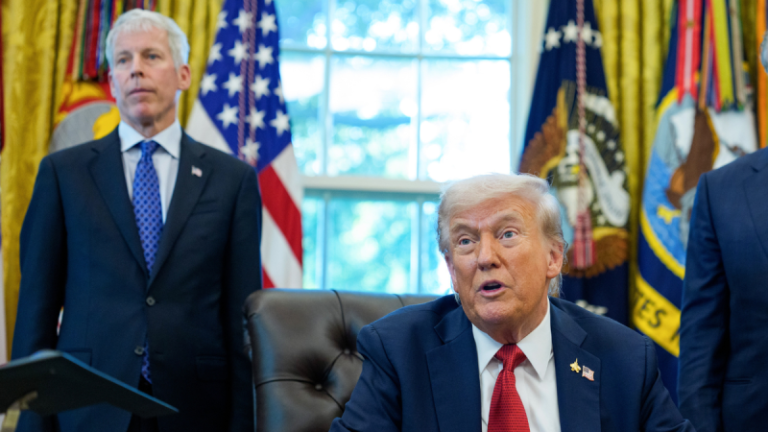
House Republicans are signaling that they’re largely OK giving President Donald Trump the reins as the U.S. and Israel continue their joint operation against Iran.

But one red line looms on the horizon for most GOP lawmakers, one that would put dozens of them in a difficult position between supporting their party leader and keeping in line with Congress’ constitutional authorities.

‘I would like to see congressional approval for boots on the ground,’ Rep. Rich McCormick, R-Ga., told Fox News Digital. He added, however, that ‘right now, it’s just an intervention, which is very similar to what Obama and Clinton and other presidents throughout my lifetime have done.’

The ongoing strikes, which killed Iran’s supreme leader and other high-ranking members of Tehran’s repressive regime, have so far been comprised of coordinated missile launches on military targets.

But the Trump administration has not ruled out having a U.S. presence on the ground there despite assurances that the mission will be finite and only lasting a matter of weeks rather than months or years.

‘The president is doing what he should be doing. … I agree with the policy,’ Rep. Chip Roy, R-Texas, told Fox News Digital. ‘If at some point this extends beyond … in terms of boots on the ground and budgetary need and scope, that starts to then demand our involvement, then we’ll look at it.’

Rep. Nancy Mace, R-S.C., said she too backed the operation, but added, ‘If ground troops get involved, I think that’s a very different conversation. That’s not where we are today.’

‘We’re taking it day by day at this point to see how things progress, but that would certainly be something that we as Congress would like to be involved in the discussion,’ Rep. Ryan Mackenzie, R-Pa., told Fox News Digital.

But he also argued that forcing the operation to end too early could do more harm than good.

‘Once the president has taken that action, that first action, if we were to pull back, it would actually leave us more vulnerable and less safe by leaving all of their capabilities in place but having started a conflict like this,’ Mackenzie said. 

‘So, we do need to follow through on the objectives, but we also need to be very much on guard to make sure that it doesn’t expand beyond what we are able to achieve.’

Others, like Rep. Mark Alford, R-Mo., were skeptical it would get to that point.

‘I don’t think we’re going to get to that point. This is much different than Iraq or Afghanistan. The capabilities that we’ve developed, the intelligence that we developed, working with the IDF — we had the capabilities now that we did not have,’ Alford told Fox News Digital.

‘Now, should it come to boots on the ground, which I don’t think it will, that’s an entirely different story. … We’re only five days into this, and I think what you’ve seen so far is having tremendous effect.’

Related Article

JONATHAN TURLEY: How Trump boxed Congress into fight or flight choice on Iran
This post appeared first on FOX NEWS
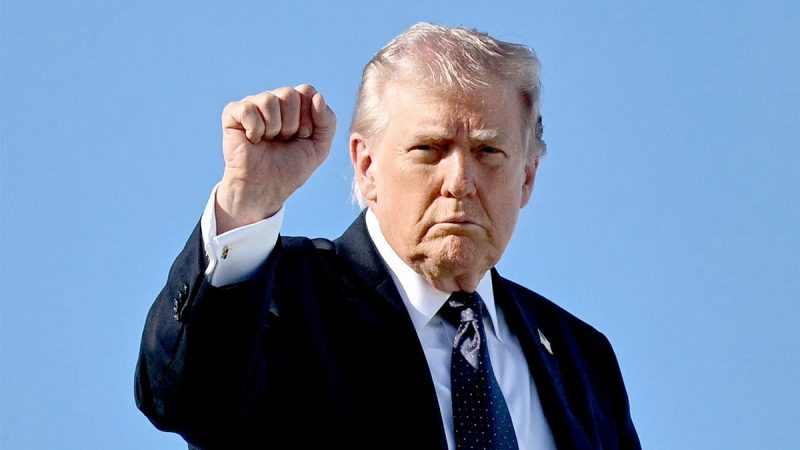
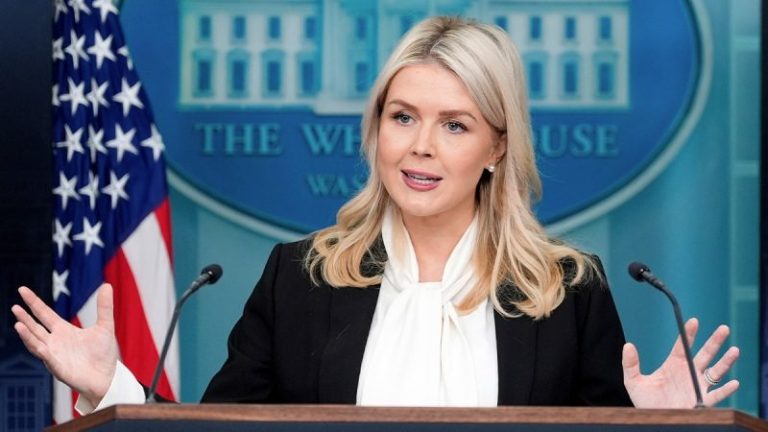
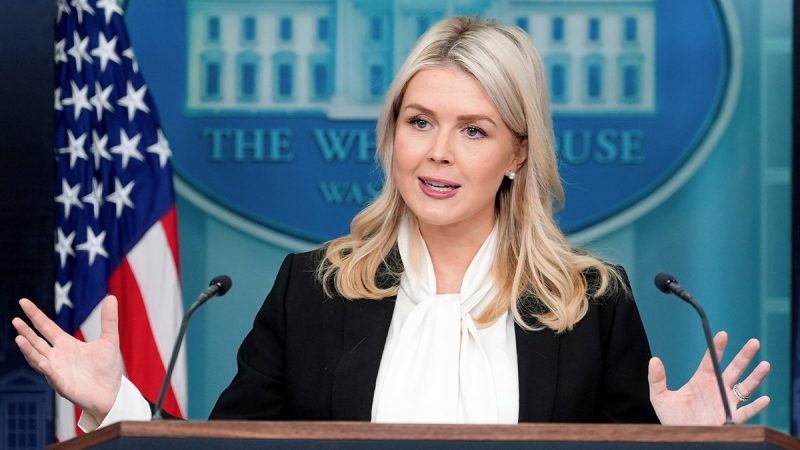
White House press secretary Karoline Leavitt would not rule out the possibility of the U.S. sending ground troops to Iran, though she said Wednesday it is not being considered at the moment.

During the first White House press briefing since Operation Epic Fury was launched, a reporter asked whether ground troops would be sent into Iran.

‘Well, they’re not part of the plan for this operation at this time, but I certainly will never take away military options on behalf of the president of the United States or the commander in chief, and he wisely does not do the same for himself,’ Leavitt said.

‘I know there’s many leaders in the past who like to take options off of the table without having a full understanding of how things could develop. So, again, it’s not part of the current plan, but I’m not going to remove an option for the president that is on the table.’

Since Saturday, the U.S. and Israel have carried out attacks on Iran using airstrikes and naval attacks, but neither country has put boots on the ground. The attacks that have been carried out thus far have targeted the regime’s security and military infrastructure, including the killing of Supreme Leader Ayatollah Ali Khamenei and other senior officials.

Leavitt said the U.S. has four main objectives with Operation Epic Fury: eliminate Iran’s ballistic missile threat, destroy its naval capability, disrupt its missile and drone production infrastructure and cut off Iran’s pathway to a nuclear weapon.

The press secretary was asked multiple times if the U.S. wished to see regime change in Iran. She repeated the objectives she previously detailed and reiterated the administration’s stance on the regime.

‘Obviously, as the president has said numerous times, do we want to see Iran being led by a rogue terrorist regime? No, of course not,’ Leavitt said.

So far, the U.S. has hit nearly 2,000 targets in Iran, and more than 17,500 Americans have returned to U.S. soil from the Middle East since the operation began.

Secretary of War Pete Hegseth gave an operational update earlier on Wednesday, saying he U.S. was ‘decisively’ winning, and later adding that Iran was ‘toast’ and if it didn’t already realize it, it would ‘soon enough.’

‘I stand before you today with one unmistakable message about Operation Epic Fury. America is winning — decisively, devastatingly and without mercy,’ Hegseth told reporters at the Pentagon.

‘The two most powerful air forces in the world will have complete control of Iranian skies. Uncontested airspace.’

Related Article

74 retired US generals, admirals back Iran strikes, warn Tehran seeks to ‘spill American blood’
This post appeared first on FOX NEWS

Iran postponed a planned farewell ceremony in Tehran for its late supreme leader, Ayatollah Ali Khamenei, who was killed Saturday in U.S.-Israeli strikes as part of Operation Epic Fury.

The three-day program was scheduled to begin Wednesday at 10 p.m. local time at Imam Khomeini Prayer Hall, where large crowds were expected to gather to pay their respects, according to Tasnim, a semi-official Iranian news agency. 

Hojjatoleslam Seyed Mohsen Mahmoudi, head of the Islamic Propaganda Coordination Council of Tehran Province, said the postponement followed widespread requests to participate and the need to provide adequate infrastructure and facilities to accommodate attendees.

‘It was decided to hold the ceremony at a more appropriate time,’ he explained.

No additional reason for the postponement was given, and it was not immediately clear when the ceremony would be rescheduled.

Israel’s Defense Minister Israel Katz warned Iranian leadership in a post on X that any successor who tries to ‘destroy Israel, to threaten the United States and the free world and the countries of the region, and to suppress the Iranian people’ will be an ‘unequivocal target for elimination.’

‘It does not matter what his name is or the place where he hides,’ Katz said.

The funeral of Ayatollah Ruhollah Khomeini, the founder of the Islamic Republic of Iran, drew massive crowds in the country’s capital on June 11, 1989, with an estimated 10.2 million people in attendance, roughly one-sixth of the nation’s population at the time. 

According to Guinness World Records, it drew the largest percentage of a population ever recorded at a funeral.

Khamenei’s death triggers a closely watched succession process overseen by Iran’s Assembly of Experts, the clerical body responsible for appointing the supreme leader.

‘The IRGC is a key stakeholder in this process, and will heavily influence its outcome,’ Jason Brodsky, policy director at United Against Nuclear Iran, told Fox News Digital.

Related Article

As Iran’s leadership shifts amid war, Hezbollah moves to reset the balance: expert
This post appeared first on FOX NEWS
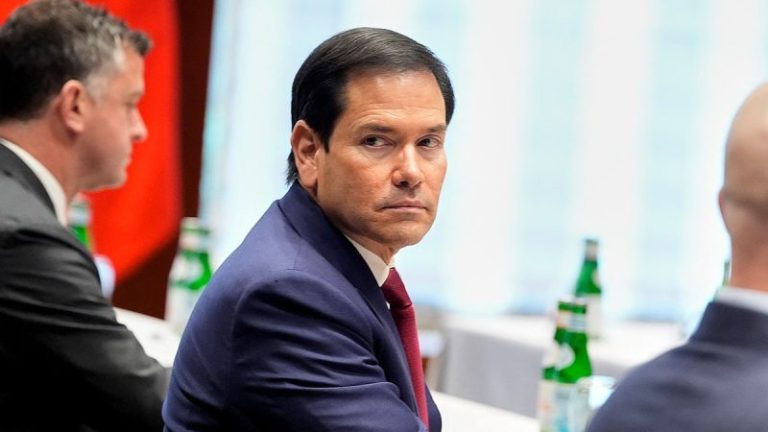
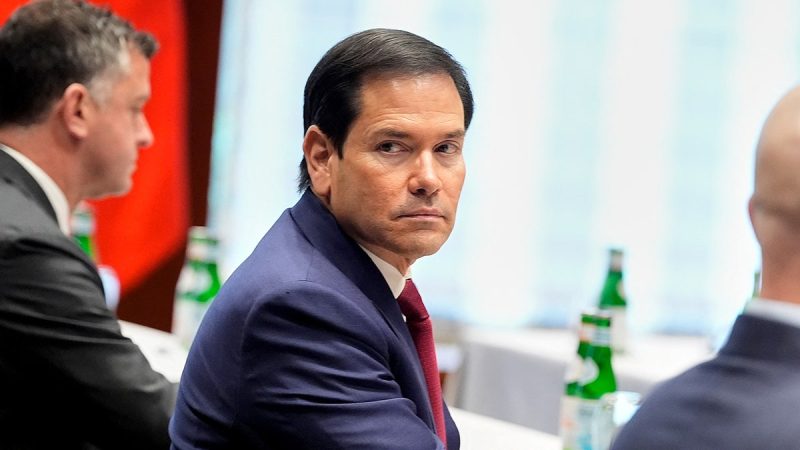
Secretary of State Marco Rubio delivered one of his bluntest defenses yet of President Donald Trump’s strikes on Iran Tuesday, sharply rejecting criticism and describing the regime as ‘lunatics’ as he argued the president acted at the right moment to prevent Tehran from obtaining a nuclear weapon.

‘Let me explain to you guys this in simple English, okay? Iran is run by lunatics, religious fanatic lunatics,’ Rubio told reporters.

‘They have an ambition to have nuclear weapons,’ Rubio said. ‘This is the weakest they’ve ever been. Now is the time to go after them.’

Rubio said Trump made the ‘right decision’ to dismantle Iran’s military capabilities before they could shield a nuclear program.

‘The president made the decision to go after them, take away their missiles, take away their navy, take away their drones … so that they can never have a nuclear weapon,’ Rubio said.

He acknowledged ‘there will be a price to pay,’ but argued it would be far lower than allowing Iran to become nuclear-armed.

‘That is a much lower price to pay than having a nuclear armed Iran,’ he said.

Rubio grew visibly sharper when pressed on whether Israel dictated the timing of the operation.

‘Your statement is false,’ he told one reporter who suggested the U.S. acted because Israel was about to strike.

Rubio confirmed Monday that Israel was prepared to act independently.

‘We knew that there was going to be an Israeli action. We knew that that would precipitate an attack against American forces,’ Rubio said. ‘And we knew that if we didn’t preemptively go after them … we would suffer higher casualties.’

He emphasized Tuesday that the decision ultimately rested with President Donald Trump.

‘The president determined we were not going to get hit first,’ Rubio said. ‘If you tell the president of the United States that if we don’t go first, we’re going to have more people killed and more people injured, the president is going to go first.’

Speaker Mike Johnson, R-La., said after a classified briefing that Israel was ‘determined to act … with or without American support,’ and that U.S. officials concluded ‘a coordinated response was necessary.’

‘I am convinced that they did the right thing,’ Johnson said.

Despite Rubio’s harsh rhetoric toward Iran’s clerical leadership, administration officials have emphasized that the mission is not aimed at overthrowing the regime but at dismantling its military capabilities.

Rubio repeatedly framed the operation as focused on destroying Iran’s ballistic missiles, launchers, drone capabilities and naval assets.

‘Iran cannot have a nuclear weapon,’ he said. ‘It cannot have the things it was hiding behind to have a nuclear weapons program.’

So far, U.S. and Israeli strikes largely have targeted missile infrastructure and military facilities. Officials have not indicated that nuclear enrichment sites have been the primary focus of the campaign.

Some Democrats questioned whether the administration demonstrated an imminent threat to the United States.

‘There was no imminent threat to the United States of America by the Iranians. It was a threat to Israel,’ Sen. Mark Warner, D-Va., said after the briefing. ‘We equate a threat to Israel is the equivalent of an imminent threat to the United States. Then we are in uncharted territory.’

Sen. Chris Murphy, D-Conn., said after the classified briefing, ‘I have no idea what the objective is, and I didn’t get any additional clarity.’

Rubio brushed aside the criticism, predicting opponents would emerge from briefings claiming they ‘didn’t hear anything’ while insisting the administration complied with congressional notification requirements.

‘This is an action by the president to address a real threat,’ Rubio said. ‘The world will be a safer place when these radical clerics no longer have access to these weapons.’

Related Article

Fetterman ‘baffled’ by lack of support for Trump’s Iran strikes and death of ‘evil’ leaders
This post appeared first on FOX NEWS
Every year around this time, Jews read the ancient Scroll of Esther and remember a Persian courtier named Haman who plotted ‘to destroy, to kill and to annihilate all the Jews’ of the empire in a single day. The story feels less like distant history and more like a chilling parallel to our present reality, because, once again, a regime in Persia — today’s Islamic Republic in Iran — openly dreams of annihilation and domination, with Jews as a central target but far from the only ones.

The holiday of Purim is often presented as a children’s tale of costumes and noisemakers, but at its core is a political battle between good and evil. A powerful ideologue identifies a people as an intolerable obstacle to his vision, secures state power behind his hatred and issues a bureaucratic death sentence. It takes courage, unity and a willingness to fight back to stop this brutal plot. Replace scroll and signet ring with rockets and proxies, and you have the worldview of today’s Iranian regime toward Israel, the United States and now, several neighboring Persian Gulf States.

When Hamas stormed Israeli communities on Oct. 7, murdering, raping and kidnapping civilians, it did not act in an ideological vacuum. Hamas has long relied on Iran’s regime for training, funding and supplying weapons.

The terror group sits within a wider ‘axis of resistance’ Tehran has painstakingly built around Israel and across the region. Whether or not Tehran signed off on the exact timing, the regime has spent decades forging a regional ‘ring of fire,’ including Hamas in Gaza, Hezbollah in Lebanon, militias in Syria and Iraq, the Houthis in Yemen, explicitly to make good on its promise that Israel is a ‘cancerous tumor’ to be removed and that American power in the Middle East must be driven out.

But in the 21st century, the Iran regime’s war is not only against Jews and not only fought with rockets and drones. It is fought with code, cameras and carefully crafted narratives aimed at Israelis, Arabs, Americans, Europeans, dissident Iranians and anyone who stands in the way of the regime’s revolutionary project. The regime has developed a sophisticated influence apparatus that uses botnets, fake personas and social media influencers to shape how global publics understand the conflict and how free societies see themselves.

Investigations have exposed networks of inauthentic accounts on X, Facebook, Instagram and Telegram pushing divisive, demoralizing content at scale. In one documented campaign, bots flooded Hebrew‑language discourse with tens of thousands of posts in under two days, amplifying internal Israeli divisions and sowing panic about the fate of hostages. Other operations have impersonated Israelis, Americans and Europeans online, pushing narratives that call for Western retreat, civil conflict and the abandonment of allies from Israel to Ukraine.

This is not the random trolling we’ve seen for years. It is state‑directed information warfare intended to achieve strategic goals, including to weaken Israeli morale, to crush the Iranian opposition, to fracture Western support, and to invert victim and aggressor in the eyes of the world. When regime‑linked operations amplify incendiary content about ‘Zionist control,’ repackage anti‑Jewish conspiracy theories as anti‑Israel ‘anti‑colonialism,’ and simultaneously smear Iranian dissidents as foreign agents, they are targeting anyone who challenges Tehran’s ambitions.

The West should recognize how a hostile regime is using every tool, including terror proxies abroad, repression at home, campus activism in the West, and algorithm‑hacking online to delegitimize democratic allies and normalize violence against minorities and dissidents. The same regime that arms Hamas and Hezbollah also guns down women removing their headscarves in Tehran, supplies drones to Russia for use in Ukraine and threatens Persian Gulf Arab states that dare to work openly with Israel. The ideological hatred that animated Haman has simply been updated and universalized.

That is why this Purim, we can all be considered like the Jews who were in the regime’s crosshairs in the sense that the story demands a vulnerable minority singled out by a power that cannot tolerate their existence, ordered to bow and vanish for the sake of someone else’s totalizing ideology. To stand with Israel after Oct. 7 is not to ignore other victims of Iran’s regime; it is to understand that the same system that dreams of erasing the Jewish state also dreams of crushing Americans, Europeans, Sunni Arabs, women on the streets of Mashhad, Shiraz or Esfahan, and students on Western campuses who refuse to chant its slogans.

Purim ends with the intended victims standing up, fighting back and surviving. For Israel and the Islamic Republic’s other targets to do the same today, free nations must be willing to confront the regime across all fronts: degrade its military capabilities, defeat its terror proxies on the battlefield, support its domestic dissidents, harden our information space against manipulation and deny Tehran the impunity it has enjoyed for far too long. The lesson of the Scroll of Esther is not parochial. It is that when a regime builds its identity around annihilation, indifference is complicity and by the time the decree reaches your own door, it may be too late.

Related Article

Beyond the Iran Deal: Why Trump’s refusal to ‘kick the can’ just saved generations
This post appeared first on FOX NEWS

Here’s a quick recap of the crypto landscape for March 4 as of 9:00 a.m. UTC.

Get the latest insights on Bitcoin, Ether and altcoins, along with a round-up of key cryptocurrency market news.

Bitcoin (BTC) was priced at US$70,987.43, up by 6.7 percent over the last 24 hours.

Bitcoin price performance, March 4, 2026.

Bitcoin price performance, March 4, 2026.

Chart via TradingView

Ether (ETH) was priced at US$2,064.63, up by 5.8 percent over the last 24 hours.

Altcoin price update

  • XRP (XRP) was priced at US$1.40, up by 4.1 percent over 24 hours.
  • Solana (SOL) was trading at US$89.34, up by 7.4 percent over 24 hours.

Today’s crypto news to know

Trump presses banks as crypto legislation fight intensifies

President Donald Trump accused major banks of trying to undermine the administration’s digital-asset agenda in a recent post on Truth Social.

Trump warned that the GENIUS Act and the broader Digital Asset Market Clarity Act must move forward quickly, arguing delays could push the industry overseas. “The U.S. needs to get Market Structure done, ASAP,” Trump wrote, adding that banks should not “hold The Clarity Act hostage.”

The remarks come as lawmakers continue debating stablecoin rules and whether crypto platforms should be allowed to offer yield on token balances—a provision banks strongly oppose.

Industry advocates echoed the urgency.

‘American leadership in digital assets is a national priority and it remains imperative that the U.S. leads. CCI is focused on ensuring that market structure legislation passes and is enacted as soon as possible. We remain committed to working constructively on a path forward on stablecoin rewards.’

The White House has framed the GENIUS Act as the first major step toward establishing federal rules for stablecoins, while the Clarity Act would define oversight responsibilities across US crypto markets.

US–UK regulators diverge on path toward tokenized finance

Efforts to coordinate digital-asset rules between the US and Britain are facing friction as regulators disagree on how quickly to test blockchain-based securities, Reuters reported.

The two countries formed a transatlantic task force last year to improve crypto cooperation and reduce barriers for firms operating across both markets. While both sides support closer alignment on stablecoins and digital-asset frameworks, officials differ on how tokenized securities should be introduced.

British regulators favor testing the technology through a regulatory sandbox, which would allow companies to trial products under supervision before wider adoption.

Some US officials, however, have raised concerns that the sandbox approach could slow innovation and limit commercial viability. Instead, the US Securities and Exchange Commission (SEC) is reportedly exploring “exemptive relief,” a model that would allow certain projects to proceed with fewer restrictions.

Bitcoin climbs past US$71,000

Bitcoin rallied past $71,000 this week—its highest level in roughly three weeks— a gain of nearly 9 percent over the week.

The surge triggered more than US$430 million in liquidations across crypto derivatives markets, with Bitcoin and Ether positions accounting for roughly two-thirds of the total.

Analysts say the move appears linked to macro instability rather than purely crypto-specific catalysts.

ETF flows have also shown signs of improvement, suggesting some institutional investors are stepping back into the market after weeks of redemptions.

Still, sentiment remains fragile with the Crypto Fear and Greed Index hovering near 10, a level associated with “extreme fear.”

Securities Disclosure: I, Meagen Seatter, hold no direct investment interest in any company mentioned in this article.

Securities Disclosure: I, Giann Liguid, hold no direct investment interest in any company mentioned in this article.

This post appeared first on investingnews.com

SSR Mining (NASDAQ:SSRM,TSX:SSRM,OTCPL:SSRGF) has agreed to sell its majority stake in the Çöpler gold mine in Turkey for US$1.5 billion in cash, shifting the company’s portfolio towards the Americas as the yellow metal continues to surge amid rising geopolitical tensions.

The Denver-based miner announced it has signed a binding memorandum of understanding to sell its 80 percent interest in the Çöpler operation and related assets to Cengiz Holding A.S., one of Turkey’s largest industrial conglomerates.

Under the terms of the agreement, the full US$1.5 billion purchase price will be paid in cash at closing, which is expected in the third quarter of 2026, subject to regulatory approvals and customary conditions.

“Over the last two years, we have worked diligently to progress the Çöpler mine to allow for a safe and responsible restart of operations,” SSR Mining executive chairman Rod Antal said. “We have also concurrently worked closely with the Turkey government authorities to address each requirement to secure the necessary approvals to restart operations.”

“We are also conducting a strategic review of our remaining platform in Turkey, including our 20 percent earned interest in the Hod Maden development project,” Antal added.

SSR Mining said the transaction, alongside its 2025 acquisition of the Cripple Creek & Victor mine in Colorado, is a deliberate shift toward an Americas-focused portfolio.

Cengiz Holding, the buyer, is a major Turkish industrial group with operations spanning mining, construction, energy, metallurgy, and chemicals.

The transaction requires a US$100 million deposit from Cengiz Holding, which will be credited toward the purchase price at closing. The agreement also includes a reciprocal break fee of US$50 million.

Either party may terminate the agreement upon payment of the US$50 million termination fee.

The deal comes during a period of heightened investor interest in gold, as geopolitical tensions in the Middle East push investors toward traditional safe-haven assets.

Gold prices recently surged close to record levels, climbing above US$5,400 per troy ounce at one point as escalating conflict involving Iran raised fears of a broader energy crisis.

Analysts say gold has benefited from a growing “global uncertainty premium” as investors reassess traditional defensive assets.

“We are seeing bonds again failing to provide protection against risk-off events, even as gold delivers,” Seb Barker, chief market strategist at hedge fund firm Marshall Wace, told the Financial Times.

At the same time, disruptions to global supply chains are adding another layer of volatility to the precious metals markets.

Dubai, which handles about 20 percent of the world’s gold trade, has seen logistics disruptions after air traffic was suspended following military strikes in the region.

Securities Disclosure: I, Giann Liguid, hold no direct investment interest in any company mentioned in this article.

This post appeared first on investingnews.com

This story discusses suicide. If you or someone you know is having thoughts of suicide, please contact the Suicide and Crisis Lifeline at 988 or 800-273-TALK (8255).

The House of Representatives is launching an internal investigation into a GOP lawmaker accused of having an affair with and sexually harassing an aide who committed suicide last year.

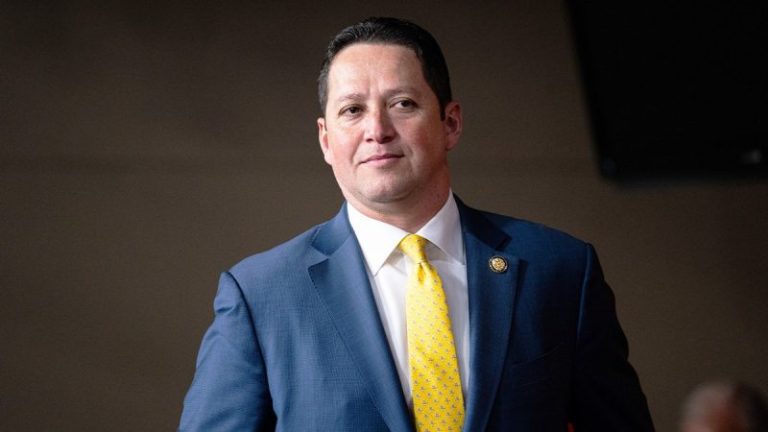
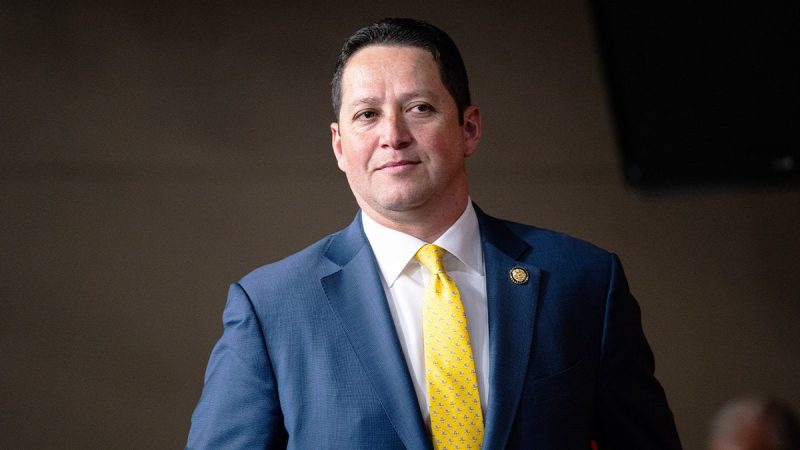
The House Ethics Committee revealed on Wednesday that it is launching an investigative subcommittee on Rep. Tony Gonzales, R-Texas, in response to allegations he ‘engaged in sexual misconduct towards an individual employed in his congressional office’ and ‘discriminated unfairly by dispensing special favors or privileges.’

Gonzales narrowly avoided defeat in his GOP primary race on Tuesday night but failed to clinch an outright majority of the vote. He’ll be facing conservative social media personality Brandon Herrera in a runoff election in May.

The Texas Republican has denied the affair with his Uvalde-based late aide, Regina Santos-Aviles, and accused her husband of extortion.

‘During my six years in Congress, not a single formal complaint has been levied against my office. Now days away from an election, coordinated political attacks reign in. IT WON’T WORK. Halfway through early voting and the intensity resides w/ TG voters. I’d rather be us than them,’ he posted on X in late February.

He told Fox News Digital in response to the probe on Wednesday, ‘I welcome the opportunity to present all the facts to the committee.’

It’s not immediately clear what impact the allegations had on his performance or how they will play out between now and his next election. Gonzales defeated Herrera by less than 2% in his 2024 Republican primary.

But the growing scandal has spurred calls for his resignation, notably by some of his fellow House Republicans.

‘I would encourage him to consider resigning,’ Rep. Anna Paulina Luna, R-Fla., told reporters last week.

His fellow Texas lawmaker, Rep. Brandon Gill, R-Texas, urged Gonzales not to run for re-election. ‘America deserves better. Tony should drop out of the race,’ he posted on X.

Rep. Nancy Mace, R-S.C., who has also called for his resignation, announced just this week that she is forcing a vote on a measure requiring the House Ethics Committee to disclose information on lawmakers accused of sexually harassing their staff. 

She told Fox News Digital that Gonzales’ situation was the impetus for her effort, ‘I mean, literally, this girl killed herself in the most heinous way. She literally lit herself on fire and died, and we’re just going to sit here and say, let the process play out? No.’

Gonzales, for his part, previously told reporters that he had no intention of resigning.

The traditionally secretive House Ethics Committee does not give a set timeline for its probes, nor does it typically forecast regular updates on them.

Related Article

House GOP Rep Doug LaMalfa dead at 65
This post appeared first on FOX NEWS

Turkey’s Defense Ministry said on Wednesday that a ballistic missile launched from Iran towards its airspace was intercepted by NATO defense systems, marking a first in the conflict with Iran. A senior NATO military official confirmed to Fox News Digital that the alliance conducted the interception.

Turkey’s Head of Communications Burhanettin Duran said that the missile was detected after it crossed into Iraqi and Syrian airspace before it was intercepted by NATO units in the eastern Mediterranean.

‘Turkey’s resolve and capacity to ensure the security of our country and our esteemed nation remain at the highest level. All necessary steps to defend Turkish territory and airspace will be taken without hesitation,’ Duran said in a statement posted on X, adding that the country’s response to ‘any potential hostile acts’ would be in accordance with international law.

‘We reiterate our warning to all parties to refrain from steps that could escalate tensions in the region and lead to the spread of the conflict to a wider area. It is of great importance that all parties act with a sense of responsibility,’ Duran added.

Turkey’s Defense Ministry issued a similar warning, saying that ‘Every step taken to defend our territory and airspace will be taken resolutely and without hesitation.’ 

‘We remind all parties that we reserve the right to respond to any hostile actions against our country,’ it said.

Turkish ⁠foreign minister Hakan Fidan reportedly spoke with Abbas Araghchi after the incident and conveyed his displeasure, according to Reuters, which cited a Turkish diplomatic source.

A NATO spokesperson told Fox News Digital that the alliance condemned the incident and affirmed that it stood by Turkey.

‘We condemn Iran’s targeting of Turkey. NATO stands firmly with all allies, including Turkey, as Iran continues its indiscriminate attacks across the region. Our deterrence and defense posture remains strong across all domains, including when it comes to air and missile defense,’ a NATO spokesperson told Fox News Digital.

NATO has parts of a broader European ballistic missile defense system on Turkish soil, including an early-warning radar at the Kurecik base that can detect missiles from Iran.

Since the launch of Operation Epic Fury on Feb. 28, Iran has carried out a series of retaliatory attacks against U.S.-allied countries in the region. Turkey is the first NATO ally to have an Iranian missile encroach upon its airspace. On March 1, an Iranian retaliatory attack killed six U.S. Army Reserve soldiers supporting Operation Epic Fury in Kuwait.

The Associated Press contributed to this report.

Related Article

US submarine sinks Iranian warship by torpedo in a first since World War II
This post appeared first on FOX NEWS

President Donald Trump will host executives of major tech companies at the White House Wednesday afternoon to sign a pledge ensuring the tech giants protect Americans against higher electricity bills tied to data center power demand.

Google, Microsoft, Meta, Oracle, xAI, OpenAI and Amazon are expected to sign the Ratepayer Protection Pledge Wednesday afternoon, Fox News Digital learned. 

The pledge will have the companies agreeing to ‘build, bring, or buy new generation resources and cover the cost of all power delivery infrastructure upgrades required for data centers,’ the White House said.

The Trump administration has promoted the proliferation of artificial intelligence to keep the U.S. as the world’s tech leader, which has included the creation of new data centers and mounting concern energy prices could increase for everyday Americans. The pledge works to combat these concerns and protect Americans against spiking electricity bills. 

The pledge will also have the companies vow against passing expenses to American households.

It also commits companies to hiring and training talent from within communities where they build and operate data centers, which will create thousands of jobs and enhance workforce skills.

‘President Trump’s ratepayer protection pledge will deliver more affordable, reliable, and secure energy for the American people and help stop the rising electricity prices that started during the previous administration,’ Energy Secretary Chris Wright said ahead of the event. ‘This plan will strengthen American energy dominance, while also ensuring the United States wins the AI race.’

Wright added: ‘We will continue partnering with technology leaders to strengthen America’s competitive edge, while keeping energy costs low for hardworking families.’

Michael Kratsios, assistant to the president and director of the White House Office of Science and Technology Policy said Trump ‘continues to ensure the U.S. leads the world in AI while strengthening the grid and driving down energy costs for American families.’

As for the tech companies, Matt Garman, chief executive officer of Amazon web services, said they are signing the pledge ‘to reinforce our commitment to paying our full energy costs and ensuring our data centers do not increase electricity bills for consumers.’

‘We welcome the Administration’s leadership on this issue and support the pledge’s commitments, which establish a clear baseline to protect ratepayers while enabling responsible, long-term energy partnerships that strengthen the grid and the communities where data centers operate,’ he said.

Microsoft vice chair and president Brad Smith also touted the pledge, calling it an ‘important step,’ with Meta president and vice chair Dina Powell McCormick saying the pledge ‘ensures families aren’t the ones footing the bill for AI’s energy consumption.’ 

McCormick said the pledge ‘gives companies like Meta the certainty we need to keep up the momentum, ensuring that American AI dominance and the prosperity of American families go hand-in-hand.’

And Ruth Porat of Alphabet and Google said the pledge affirms the company’s ‘long-held commitment to protect energy affordability for American households, accelerate breakthroughs to secure America’s energy future, and deliver energy infrastructure – all of which are critical to maintaining America’s global leadership in this era of innovation.’

‘Building the infrastructure to advance AI is vital for America’s economic competitiveness and for ensuring the benefits of AI reach everyone,’ OpenAI chief operating officer Brad Lightcap said. ‘As demand for AI continues to grow, we believe the infrastructure that enables AI should benefit the communities that make it possible, and that’s why we’re proud to support the White House’s Ratepayer Protection Pledge.’

The White House said the pledge will contribute to ‘lower electricity costs, stronger grid infrastructure, and enhanced grid resilience during emergencies.’

The president announced the Ratepayer Protection Pledge during his State of the Union address in February. 

‘Tonight, I’m pleased to announce that I have negotiated the new ratepayer protection pledge,’ he said. ‘You know what that is? We’re telling the major tech companies that they have the obligation to provide for their own power needs.’

‘We have an old grid,’ he said. ‘It could never handle the kind of numbers, the amount of electricity that’s needed. So I’m telling them, they can build their own plant. They’re going to produce their own electricity. It will ensure the company’s ability to get electricity, while at the same time, lowering prices of electricity for you.’ 

The AI race has pitted the U.S. against China as tech leader, with the Trump administration amplifying efforts to not cede ground to the Asian nation since January 2025. Texas, Louisiana and Pennsylvania are among states seeing expanded data center campuses and AI growth. 

A White House official previously told Fox Digital that the president and administration have been working on the initiative for a while, including Trump posting about the issue on Truth Social in January. 

The pledge comes as affordability concerns continue to be a top issue for voters heading into the midterm election season. Democratic candidates in just a handful of races in the off-year 2025 cycle campaigned on promises of lowering costs for everyday Americans, which proved to be a winning strategy on election night. 

Trump has consistently pushed back on Democrats promoting affordability, pointing to sky-high inflation under the Biden administration as evidence that liberal policies have left Americans’ pocketbooks with less cash. 

Related Article

Scoop: Trump brings Big Tech to White House to curb power costs amid AI boom
This post appeared first on FOX NEWS