Author

admin

Browsing

  • Data will support design and planning of first in human clinical trials
  • Preparing for pre-IND meeting with the FDA

InMed Pharmaceuticals Inc. (NASDAQ: INM) (‘InMed’ or the ‘Company’), a pharmaceutical company developing a pipeline of proprietary small-molecule drug candidates for diseases with high unmet medical needs, today announced the successful completion of pharmacokinetic (‘PK’) studies in large animal models for its Alzheimer’s disease candidate INM-901.

This marks the first preclinical study in which the oral formulation of INM-901 was administered in large animals. The results provide additional data in guiding decisions in the design of a human Phase 1 clinical trial program.

Positive PK and Neurological Assessment Results

Over a seven-day dosing period, the studies demonstrated robust bioavailability in in vivo models. INM-901 achieved what is anticipated to be therapeutic levels of systemic exposure, supporting its potential utility in neurodegenerative disorders such as Alzheimer’s disease.

In addition, neurological assessments evaluating general attitude, behavior, and motor function revealed no adverse neural or behavioral effects, reinforcing the compound’s favorable profile and supporting its continued advancement toward first-in-human clinical trials.

In parallel, InMed has completed additional chemistry, manufacturing, and controls (‘CMC’) development to scale the INM-901 manufacturing process in preparation for Investigational New Drug (‘IND’)-enabling studies and regulatory interaction with the Food and Drug Administration (‘FDA’).

Dr. Eric Hsu, Senior Vice President, Preclinical Research and Development at InMed, commented, ‘The successful completion of our first large animal PK study is very encouraging for the INM-901 program. The data supports the clinical applicability of our INM-901 oral formulation and provides important insights as we plan and design our IND-enabling studies and Phase 1 clinical trials. Furthermore, the neurological assessments strengthen our confidence in the compound’s overall safety profile.’

Next development steps:

  • Advancing CMC activities for scale-up and supply
  • Dose ranging studies in two species
  • Preparing for a pre-IND meeting with the FDA
  • GLP-enabling studies to support an IND submission

To learn more about the INM-901program, please visit the website at: https://www.inmedpharma.com/pharmaceutical/inm-901-for-alzheimers-disease/.

About InMed:

InMed Pharmaceuticals is a pharmaceutical drug development company focused on developing a pipeline of proprietary small molecule drug candidates targeting the CB1/CB2 receptors. InMed’s pipeline consists of three separate programs in the treatment of Alzheimer’s, ocular and dermatological indications. For more information, visit www.inmedpharma.com.

Investor Contact:
Colin Clancy
Vice President, Investor Relations
and Corporate Communications
T: +1.604.416.0999
E: ir@inmedpharma.com

Cautionary Note Regarding Forward-Looking Information:

This news release contains ‘forward-looking information’ and ‘forward-looking statements’ (collectively, ‘forward-looking information’) within the meaning of applicable securities laws. Forward-looking statements are frequently, but not always, identified by words such as ‘expects’, ‘anticipates’, ‘believes’, ‘intends’, ‘potential’, ‘possible’, ‘would’ and similar expressions. Such statements, based as they are on current expectations of management, inherently involve numerous risks, uncertainties and assumptions, known and unknown, many of which are beyond our control. Forward-looking information is based on management’s current expectations and beliefs and is subject to a number of risks and uncertainties that could cause actual results to differ materially from those described in the forward-looking statements. Without limiting the foregoing, forward-looking information in this news release includes, but is not limited to, statements about: the efficacy of INM-901; the favorable bioavailability profile of INM-901 oral formulation; planning and preparation for pre-IND meeting with the FDA; positive results demonstrating robust bioavailability of INM-901; no adverse neural or behavioral effects using INM-901; the clinical applicability of our INM-901 oral formulation; INM-901’s overall safety profile and next development steps including advancing CMC, dose ranging and GLP studies.

Additionally, there are known and unknown risk factors which could cause InMed’s actual results, performance, or achievements to be materially different from any future results, performance or achievements expressed or implied by the forward-looking information contained herein. A complete discussion of the risks and uncertainties facing InMed’s stand-alone business is disclosed in InMed’s Annual Report on Form 10-K and other filings with the Securities and Exchange Commission on www.sec.gov.

All forward-looking information herein is qualified in its entirety by this cautionary statement, and InMed disclaims any obligation to revise or update any such forward-looking information or to publicly announce the result of any revisions to any of the forward-looking information contained herein to reflect future results, events or developments, except as required by law.

Corporate Logo

To view the source version of this press release, please visit https://www.newsfilecorp.com/release/274918

News Provided by Newsfile via QuoteMedia

This post appeared first on investingnews.com

The House Freedom Caucus is rallying behind one of its own members’ push to impeach U.S. District Judge James Boasberg.

Rep. Brandon Gill, R-Texas, introduced an impeachment resolution against Boasberg last month for his role in Arctic Frost, a code name for ex-special counsel Jack Smith’s probe into President Donald Trump and the 2020 election.

Gill argued Boasberg acted in a partisan fashion when he signed off on subpoenas and gag orders related to the investigation, including subpoenas for phone records from several Republican legislators in Congress — the news of which was made public in documents released by Senate Judiciary Committee Chairman Chuck Grassley, R-Iowa, this year.

But it’s not immediately clear whether the push to impeach Boasberg is strong enough to launch an actual pressure campaign on House GOP leaders.

‘It absolutely should be done,’ House Freedom Caucus Chairman Andy Harris, R-Md., told Fox News Digital last week. ‘I think this is levels above what we thought was going on. His bias is pretty clear, someone with that kind of bias cannot exist in the federal judiciary.’

But Harris signaled it would not be an issue the conservative group would pressure House Speaker Mike Johnson, R-La., on anytime soon.

‘No, we have other issues as well. We’re concentrated right now on the fiscal issues,’ Harris said when asked if he would bring the issue to House leaders. ‘But we have discussed that, and there is broad support to impeach the judge.’

Still, his conservative caucus appears largely supportive.

‘I think there’s considerable movement over here, particularly in light of, actually the genesis here, Arctic Frost … the massive concerns we have with what the judge is doing — just making up facts out of thin air and assumptions based on motives that have no basis,’ House Freedom Caucus Policy Chairman Chip Roy, R-Texas, told Fox News Digital.

Rep. Ralph Norman, R-S.C., who is also running for governor of South Carolina, told Fox News Digital, ‘I hope so,’ when asked if this impeachment push would be stronger than the last.

‘He’s so partisan. He’s one of the rogue judges that exist today,’ Norman said. ‘There are consequences for what he did.’

Meanwhile, Rep. Eli Crane, R-Ariz., pointed out that he was one of the earliest supporters of impeaching judges who conservatives saw as casting overly partisan rulings in the Trump era.

‘I think a lot of these judges have gone way out of bounds and violated their oaths. I’m in support of it, yeah,’ he told Fox News Digital.

He was more cautious when asked if it would yield results. ‘I don’t tend to have confidence in anything around here until I see action taken. Talk is cheap,’ Crane said.

Gill was one of several House Freedom Caucus members to introduce impeachment resolutions against Boasberg this past spring, when he issued an order temporarily blocking Trump’s deportation flights to El Salvador. 

At the time, however, Johnson warned Republicans that impeachment was not the most practical way to curb ‘rogue judges’ — pointing out that removal would require support in the Senate that simply was not there.

Instead, House GOP leaders rallied around a bill by Rep. Darrell Issa, R-Calif., subcommittee chair of the House Judiciary panel’s subcommittee on courts.

That legislation, aimed at limiting the power of district court judges to issue nationwide injunctions, passed the House in early April but was never taken up in the Senate.

Issa himself cautioned against moving too quickly toward impeachment when asked by Fox News Digital last week.

‘We have a number of rogue judges, and I think before we talk about impeachment, with so many people seeing wrongdoing, both the House and the Senate need to hold appropriate hearings and evaluate just what the proper definition of good behavior is and whether not just one, but multiple judges, may have clearly violated that,’ Issa said. ‘I think that’s the right way to approach it.’

Issa said he was ‘looking at’ holding a hearing on the matter when lawmakers returned to Capitol Hill after Thanksgiving.

Fox News Digital reached out to the U.S. Courts system, which declined to comment for this story.

This post appeared first on FOX NEWS

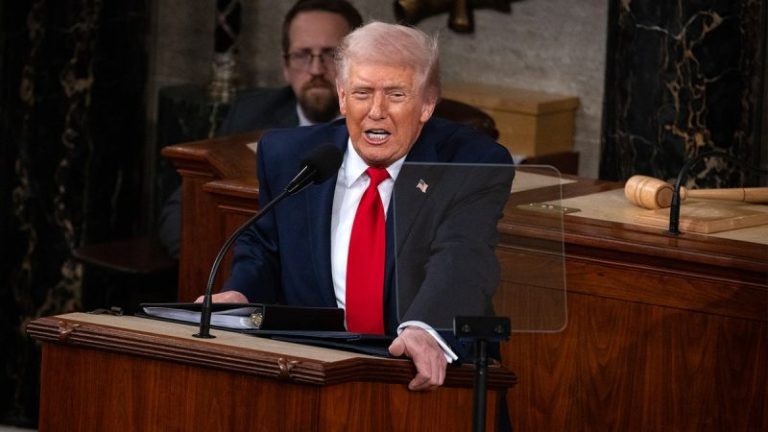
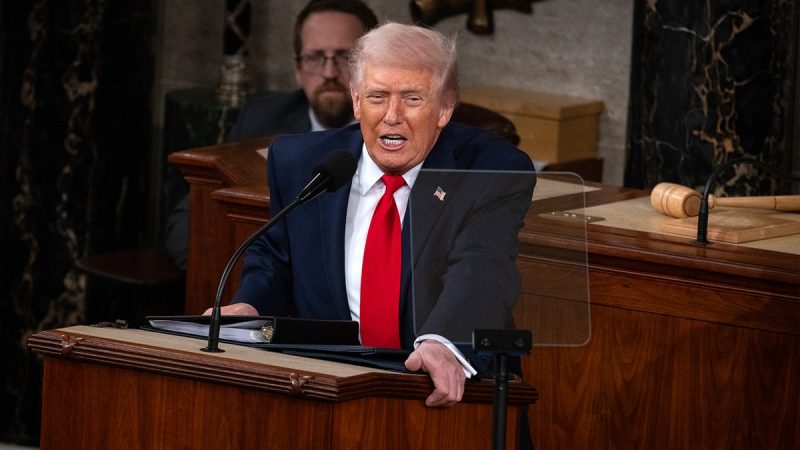
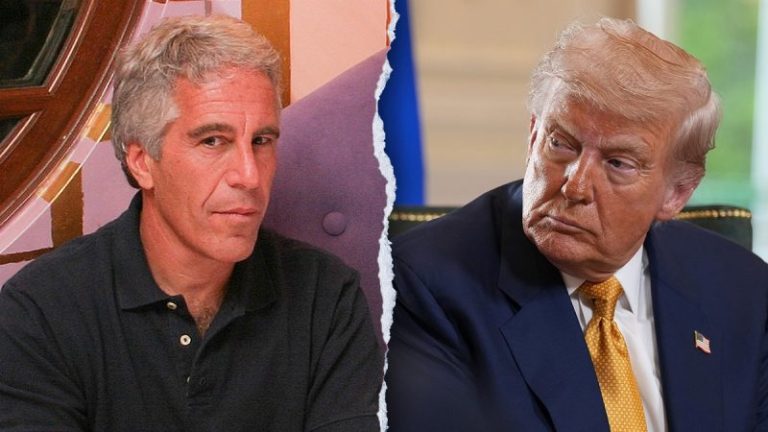
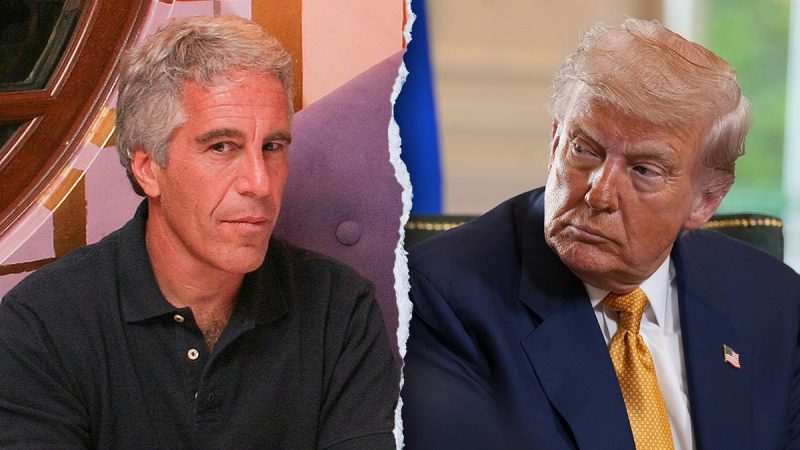
House Republicans are cautiously supportive of a bipartisan bill aimed at forcing the Department of Justice (DOJ) to release all its files on Jeffrey Epstein’s case after President Donald Trump gave the bill his stamp of approval on Sunday night.

GOP lawmakers who spoke with Fox News Digital Monday evening said they would vote for the bill and were optimistic their colleagues would as well — though many of them said they still had concerns about how it was written.

It comes after Speaker Mike Johnson, R-La., who had been against the bill but pushing parallel transparency efforts in Epstein’s case, said he hoped it would undergo material changes when it reached the Senate to give more protection for innocent people whose names may appear in the files against their wishes.

‘I have real concerns about the discharge language in the House draft,’ Johnson said. ‘But I do have some comfort that, I think if and when it’s processed in the Senate, that they’ll be able to correct some of those concerns, if we have the protection of victims and whistleblowers and all the rest.’

The legislation is coming to the House floor on Tuesday afternoon via a mechanism called a discharge petition led by Rep Ro. Khanna, D-Calif., and Rep. Thomas Massie, R-Ky. The latter has found himself at odds with both Johnson and Trump on several key issues this year.

A discharge petition allows a bill to get a House-wide vote against leaders’ wishes, provided the petition gets support from most lawmakers in the chamber — which in this case, it did last week.

Rep. Byron Donalds, R-Fla., a Trump ally who is running for governor in Florida, said he would vote for the bill but shared Johnson’s concerns.

‘Number one, Congress has never released criminal files ever in the history of Congress. Two, there are victims, and I know we’re supposed to be trying to do what we can to sanitize their names or cover their names or redact their names, but you know, that doesn’t mean it’s going to be foolproof,’ Donalds said.

‘You could have victims that don’t want to be released, be identified, and then they have to go relive this again. What about those women? What if those women have kids now? What if those women have husbands now and they don’t want to go through this? So I think there’s a reason why political bodies don’t release criminal files.’

Donalds said he would vote to release the files, however, to move past this chapter and help victims get closure.

‘It’s become such a huge distraction here on Capitol Hill. And I do want to see justice for those victims, if they were abused,’ he said.

Republican Study Committee Chairman August Pfluger, R-Fla., said, ‘I’m gonna vote in favor of it, but it’s not perfect, and there’s a lot of things that need to be addressed.’

‘Transparency is key. My district needs transparency. The president has nothing to hide, but things that need to be fixed, have to be fixed in the Senate,’ Pfluger, who pledged to support the bill before Trump’s blessing, said.

Rep. Erin Houchin, R-Ind., said she had similar concerns ‘from the start.’

‘Once it goes to the Senate, if the Senate believes they need to have broader or, you know, bigger protections, then I think that’ll be up to the Senate to decide, but I’m ready to vote this out of the House and send it over to the Senate and get moving on it,’ Houchin said.

A member of the conservative House Freedom Caucus, Rep. Andy Ogles, R-Tenn., questioned whether such a move by Congress could get in the way of the DOJ’s active probes into Epstein.

‘I have concerns as well. I mean, you have the Department of Justice investigations taking place. Are we inadvertently interfering?’ he posed.

Ogles said, however, that he believed most House Republicans like himself would back the bill.

‘With the president coming out in support of it, I think that sends a clear message that he’s not afraid of what’s in it, the Democrats should be,’ he said.

Rep. Rich McCormick, R-Ga., similarly said he believed Trump’s support alleviated some difficulties for Republicans.

‘I think it releases any angst they might have when we’re voting for it,’ McCormick said. ‘I think most people will vote for it, I don’t think it’s going to be a controversial bill at all.’

Houchin told Fox News Digital, ‘I think he moved the needle tremendously, just to say, you know, let’s have a vote on it and let’s stop talking about it.’

But Rep. Russell Fry, R-S.C., disagreed that Trump’s support had a significant effect on shifting the tide.

‘I mean, maybe a little bit, but I think people were largely there anyway,’ Fry said. ‘We talked about this on the campaign trail, The guy was a total dirtbag, did unspeakable atrocities on women in our country, and the public wants closure…this has been the most transparent Congress and administration on this subject in the country’s history.’

Trump posted on Truth Social on Sunday night, ‘House Republicans should vote to release the Epstein files, because we have nothing to hide, and it’s time to move on from this Democrat Hoax.’

It appeared to lead to Rep. Troy Nehls, R-Texas, who notably said he would oppose the measure on Friday, changing his mind as of Monday night. He told reporters ‘everybody’ would vote in favor of the bill and pointed out, ‘Donald Trump made a decision.’

House Oversight Committee Chairman James Comer, R-Ky., who was leading the Johnson-backed probe into Epstein, appeared similarly resigned on Monday.

‘At this point, I just think the best thing to do — there’s so much media frenzy and curiosity about this, and you know, the survivors act like they want everything to come out. I want everything to come out….any other villains in this, we’ll try to figure out what we can,’ he said.

And Massie told reporters that same evening that he would be open but cautious about any changes to his bill in the Senate.

‘If the Senate wants to improve this bill without limiting the disclosure, that would be fine by me. But if they try to monkey it up, I think those senators are gonna get in front of a freight train and be in a lot of trouble with their supporters,’ he warned.

Massie told Fox News Digital of Johnson’s concerns, ‘He needs to be for it or against it. I think he’s going to vote for it, so he must think there’s more good than bad.’

Senate Majority Leader John Thune, R-S.D., has not yet said what he would do if the bill passed the House on Tuesday.

This post appeared first on FOX NEWS

East Star Resources (LSE:EST) and Endeavour Exploration announced they have entered into a binding earn-in and joint venture (JV) agreement to advance gold exploration in Kazakhstan.

Endeavour Exploration, a subsidiary of top gold producer Endeavour Mining (LSE:EDV,TSX:EDV,OTCQX:EDVMF), will have the right to earn up to an 80 percent interest in a new JV company via staged investments.

Stage 1 includes a US$5 million payment within two years, equivalent to a 51 percent interest. If an additional US$20 million is given over three years, its interest will increase to 70 percent.

The last 10 percent will be given to Endeavour if it funds and completes a prefeasibility study.

During the initial phase, East Star will act as manager of the JV.

The area of interest for the partnership includes two proven, underexplored mineral belts.

‘This agreement with Endeavour is a transformational milestone for East Star that validates the quality of our exploration programme and provides a clear pathway to unlock the full potential of our gold exploration strategy,” said East Star Resources CEO Alex Walker in a November 13 press release.

While the JV will focus on gold, East Star is also pursuing copper in Kazakhstan.

Its assets include a volcanogenic massive sulfide deposit with a JORC-compliant resource estimate of 20.3 million metric tons at 1.16 percent copper, 1.54 percent zinc and 0.27 percent lead.

An investor webcast is scheduled for Tuesday (November 18) to discuss the terms of the JV.

Both parties will fund the JV company in proportion to their ownership share after the earn-in period.

Securities Disclosure: I, Gabrielle de la Cruz, hold no direct investment interest in any company mentioned in this article.

This post appeared first on investingnews.com

Rio Tinto (ASX:RIO,NYSE:RIO,LSE:RIO) said on Monday (November 17) that it has signed a joint development agreement with environmental technology company Calix (NYSE:CALX,ASX:CXL) to develop Calix’s Zero Emissions Steel Technology (Zesty) green iron demonstration plant in Western Australia.

If approved, the plant will be built at a site in Kwinana, south of Perth, that was previously earmarked for Rio Tinto’s BioIron research and development facility and associated pilot plant.

Under the deal with Calix, Rio Tinto will invest more than AU$35 million, pending project milestones. Funding from the mining giant will include both in-kind and financial contributions.

The plant received AU$44.9 million in Australian Renewable Energy Agency support in July.

Rio Tinto’s work will include helping Calix reach a final investment decision through technical support, engineering services and advocacy. Subject to a final investment decision and successful project construction, Rio Tinto will provide up to 10,000 tonnes of various Pilbara iron ores for plant commissioning and the initial testing phase.

The miner will also provide introductions to potential customers for downstream use of the Zesty product.

“The world needs low-emissions steel if it is going to decarbonise, and we continue to look at a range of ways Pilbara iron ores can help to do this as new technologies emerge,” said Rio Tinto Iron Ore Chief Executive Matthew Holcz.

He added that Rio Tinto will keep progressing BioIron with its partners, the University of Nottingham and Metso. However, the company has decided that the current furnace design requires additional development.

“Both projects are part of our work to reduce emissions and support the future of iron ore in Australia and the communities that depend on it,’ Holcz added, referring to Zesty and BioIron.

Securities Disclosure: I, Gabrielle de la Cruz, hold no direct investment interest in any company mentioned in this article.

This post appeared first on investingnews.com

Graphite One (TSXV:GPH,OTCQX:GPHOF) announced on November 13 that it has identified rare earth elements (REEs) at its Graphite Creek deposit, located north of Nome, Alaska.

“The presence of two Defense Production Act Title III materials — graphite and REEs — in a single deposit further underscores Graphite Creek’s position as a truly generational deposit,” said President Anthony Houston.

“Given the robust economics of our planned complete graphite materials supply chain, the presence of Rare Earths at Graphite Creek suggests that recovery as a by-product to our graphite production will maximize the value.”

Geochemical analysis of drillcore samples reveals elevated levels of heavy rare earths and all five principal permanent magnet REEs: neodymium, praseodymium, dysprosium, terbium and samarium.

Testwork is ongoing at the University of Alaska Fairbanks’ Advanced Instrumentation Laboratory, and at Activation Laboratories. Graphite One is also collaborating with a US Department of Energy national lab on REE extraction.

REEs are essential to modern technologies, from permanent magnets in wind turbines and electric vehicles, to high-performance fiber optics, lasers and defense systems.

China, which dominates global production of both magnet REEs and graphite, imposed export limits last year and has continued to expand these restrictions in 2025.

Graphite One is advancing a US-based graphite supply chain, including transport from Nome to an advanced graphite and battery materials plant in Warren, Ohio, with a co-located recycling facility to reclaim graphite and other materials.

Graphite Creek has received support through a US$37.5 million Defense Production Act Title III grant, as well as non-binding letters of interest totaling US$895 million from EXIM Bank.

Securities Disclosure: I, Giann Liguid, hold no direct investment interest in any company mentioned in this article.

This post appeared first on investingnews.com

Researchers have documented the first known recovery of naturally formed nanoscale monazite from a living plant, potentially opening up new paths to recover in-demand rare earth materials.

The study, published this month in Environmental Science & Technology, identifies nanoscale monazite crystals inside Blechnum orientale, an evergreen fern known to accumulate rare earths at unusually high concentrations.

The work was carried out by researchers at the Guangzhou Institute of Geochemistry under the Chinese Academy of Sciences, in collaboration with a geoscientist at Virginia Tech in the US.

In the paper, the authors write that the discovery “opens new possibilities for the direct recovery of functional rare earth element (REE) materials,” adding, “To our knowledge, this is the earliest reported occurrence of rare earth elements crystallising into a mineral phase within a hyperaccumulator.”

The method, known as phytomining, relies on certain plants that naturally pull unusual amounts of metals from the ground. In this case, the fern absorbed rare earths so efficiently that tiny mineral crystals formed inside its tissues.

The mineral identified — monazite — is normally created deep underground under intense heat and pressure.

The team’s analysis shows that the fern somehow produced nanoscale versions of it under normal surface conditions, with the highest concentrations found in its leaflets and roots. In this state, the plant appears to lock the metals outside its cells as a way of protecting itself, with the process enabling the mineral to crystallize.

Monazite is prized for uses ranging from lasers to electronics to materials that withstand high heat and radiation, so finding it naturally produced inside a plant could open up a new, lower-impact source of rare earths.

REEs take priority in global supply race

REEs, a group of metals used in permanent magnets, lasers, consumer electronics and advanced defense systems, are receiving renewed international scrutiny as governments race to reduce dependence on concentrated supply chains.

Earlier this month, the US Department of the Interior published its final 2025 list of critical minerals, naming 60 minerals deemed vital to the American economy and exposed to supply risk.

The list emphasizes the importance of rare earths, which the US imports heavily, and highlights neodymium, scandium and dysprosium as metals where supply disruptions would impose the “highest cost” on the US economy.

Washington has moved in parallel to strengthen access to rare earths through domestic production, expanded mapping of US deposits and agreements with partners in Australia, Japan, Malaysia and Thailand.

In addition to these efforts, US officials continue to signal confidence that Beijing will adhere to commitments under a rare earths framework outlined last month.

Secretary of the Treasury Scott Bessent said in a recent interview that a deal with China will “hopefully” be done by Thanksgiving, while also rejecting a report suggesting that Beijing is planning new restrictions on US companies.

Are plants a viable source of rare earths?

The use of ferns for mineral extraction remains at an early stage, and the researchers emphasize that phytomining is not a replacement for conventional production.

But finding mineralized rare earths in a living organism offers a proof of concept that could broaden how countries approach resource development at a time when REEs remain strategically critical for major economies.

As the US, China and other nations look for secure supply routes, the possibility that plants themselves may contribute to the pipeline adds a new dimension to a field dominated by mining companies.

Securities Disclosure: I, Giann Liguid, hold no direct investment interest in any company mentioned in this article.

This post appeared first on investingnews.com

The U.N. Security Council on Monday adopted a U.S.-backed resolution to end the Gaza war and deploy an international stabilization force after Ambassador Mike Waltz urged members to support what he called ‘a bold, pragmatic blueprint’ born from President Donald Trump’s 20-point peace plan.

In an address to the council, Waltz described Gaza as ‘a hell on earth’ after two years of conflict, saying the resolution offered the world a chance to replace ‘rubble where schools once stood’ with ‘a path to peace.’ The measure passed 14–0, with two abstentions — including Russia — and was adopted.

‘Voting yes today isn’t just endorsing a plan,’ Waltz said. ‘It’s affirming our shared humanity. A vote against this resolution is a vote to return to war.’

The plan, developed through U.S.-led diplomacy with Qatar, Egypt, Saudi Arabia, the United Arab Emirates, Turkey, Pakistan, and Indonesia, establishes a multinational stabilization force to secure Gaza, oversee demilitarization and protect civilians as Israel gradually withdraws.

Waltz said many of the peacekeepers will come from Muslim-majority nations, including Indonesia and Azerbaijan.

He credited Jared Kushner and special envoy Steve Witkoff with brokering the deal, which has already produced what he called ‘tangible results’ — a holding ceasefire and the release of 45 hostages by Hamas. Waltz said the United States remains committed to ensuring the return of the remaining hostages still believed to be held in Gaza.

‘This resolution charts a path for Palestinian self-determination after the Palestinian Authority completes key reforms,’ Waltz said. ‘It dismantles Hamas’s grip and ensures Gaza rises free from terror’s shadow — prosperous and secure.’

Following the vote, Waltz thanked Council members for what he called ‘a historic and constructive resolution’ and praised the coalition of nations that supported Trump’s plan.

He said the Board of Peace, which will be led by the president, ‘remains the cornerstone of our effort’ to rebuild Gaza and establish accountable local governance.

The board will coordinate humanitarian assistance, oversee reconstruction, and support a technocratic Palestinian committee responsible for day-to-day administration while the Palestinian Authority implements its reforms. Waltz said the stabilization force will ‘dismantle terrorist infrastructure, decommission weapons, and maintain the safety of Palestinian civilians.’

‘The path to prosperity requires security first,’ Waltz said. ‘Security is the oxygen that governance and development need to live and thrive.’

Russia abstained from the vote after circulating a rival draft. Waltz said hesitation and delay would only ‘cost lives,’ adding that ‘every day without this force, aid trucks lie idle, children starve, and extremists regroup.’

Trump praised the U.N. Security Council’s passage of the Gaza peace resolution Monday, calling it ‘one of the biggest approvals in the history of the United Nations.’

In a post on Truth Social, Trump congratulated world leaders and said the creation of the Board of Peace, which he will chair, represents ‘a moment of true historic proportion.’

Trump said the board will include ‘the most powerful and respected leaders throughout the world’ and pledged to announce additional members in the coming weeks. He thanked both Security Council members and partner nations — including Qatar, Egypt, Saudi Arabia, the United Arab Emirates, Indonesia, Turkey, and Jordan — for backing the plan.

‘This will go down as one of the biggest approvals in the history of the United Nations,’ Trump wrote. ‘It will lead to further peace all over the world and is a moment of true historic proportion.’

Trump’s message echoed the themes laid out by Waltz, who credited the president’s leadership and diplomacy for uniting regional powers behind the peace initiative.

‘President Trump’s historic 20-point plan marks the beginning of a strong, stable, and prosperous region,’ Waltz said. ‘Under President Trump’s bold leadership, the United States will continue to deliver results alongside our partners to make lasting peace a reality.’

This post appeared first on FOX NEWS