
Author

admin

Browsing

Centralized crypto exchanges are blending TradFi with crypto, and the data shows it’s catching on fast.

TradFi tokenization, where digital tokens represent traditional assets on a blockchain, allows investors to trade stocks, bonds, commodities and other off‑chain instruments on a crypto exchange.

Users also often benefit from 24/7 markets and lower barriers to entry.

Bitget, a centralized cryptocurrency exchange founded in 2018 that offers a range of crypto‑native products, launched Bitget TradFi in January, opening tokenized access to global forex, commodities, indexes, metals and stock contracts for differences under its Universal Exchange framework.

According to Bitget’s January 2026 Transparency Report, Bitget users traded U$4 billion per day in tokenized TradFi products. Additionally, daily TradFi trading volume doubled from US$2 billion in just two weeks, marking a clear shift in how centralized exchanges (CEXs) are expanding beyond crypto-only markets.

Crypto remained the main business for Bitget, accounting for 88.25 percent of total platform volume, while roughly 11 to 12 percent of all Bitget trading volume came from tokenized TradFi products.

The findings indicate that exchanges are becoming hybrid platforms for tokenized versions of traditional financial instruments alongside Bitcoin, Ether and other altcoins.

The reshaping of the crypto ecosystem

Bitget CEO Gracy Chen said that the January numbers show users prefer to manage most of their positions through a single account, reducing boundaries between so-called crypto hours and market hours.

Chen sees a division of roles for the long-term balance:

“CEXs concentrate most of the liquidity and make execution predictable, as one operator is accountable for controls, surveillance and incident response. DeFi, in turn, ensures the open settlement layer where assets can be reused across lending, trading and where new risk tools are deployed way faster since integration is permissionless.

“TradFi growth, as we read it, also means more activity moving into tokenized FX, metals and indices, which increases stablecoin settlement demand and creates exactly those steady hedging needs. Over time, this supports onchain lending liquidity, funding and basis trades, and more sophisticated collateral management inside protocols and wallets.”

This symbiotic setup relies on CEXs proving they can be trusted custodians.

Beyond volume, Bitget’s proof‑of‑reserves disclosures show how big exchanges can leverage strong balance sheets and on‑chain checks as a selling point. Bitget’s average reserve ratio of 163 percent, with Bitcoin at 254 percent and Ether at 161 percent, signals that top CEXs can now credibly claim they hold more than enough to cover user deposits.

The fact that users can verify their inclusion in the proof‑of‑reserves snapshot also suggests transparency is becoming a baseline expectation. That lines up with Bitget’s Universal Exchange strategy. For the industry, liquidity and users are being pulled into centralized gateways, but only if integrity holds.

“Tokenized exposure needs plain-English terms on what the instrument represents, robust price formation (including oracle design and safeguards) and transparent margin and liquidation mechanics,” Chen continued.

“If those pieces are in place, TradFi volume could translate into recurring onchain usage. If they’re weak, the activity risks being short-cycle and not getting a wider spread.”

Rather than replacing DeFi, Bitget may force DeFi to specialize in plumbing, liquidity pools, oracles and settlement rails, while CEXs capture the bulk of retail demand for easy, regulated‑adjacent exposure to global markets.

Securities Disclosure: I, Meagen Seatter, hold no direct investment interest in any company mentioned in this article.

This post appeared first on investingnews.com

Ontario is moving to accelerate one of Canada’s largest emerging gold projects, cutting permitting timelines in half for Kinross Gold’s (TSX:K,NYSE:KGC) Great Bear development in the Red Lake district.

The province announced that Great Bear will be designated under its new One Project, One Process (1P1P) framework, a streamlined approval system aimed at reducing government review times by 50 percent.

Located approximately 24 kilometers southeast of Red Lake in Northwestern Ontario, Great Bear is designed as a high-grade, combined open-pit and underground operation with an initial mine life of 12 years.

According to Kinross, the project is expected to produce more than 500,000 ounces of gold annually during its peak years, alongside potential initial production of 5.3 million ounces.

Great Bear has longer-term expansion potential supported by ongoing exploration.

Kinross acquired the project in 2022 through its purchase of Great Bear Resources before any formal mineral resource estimates had been completed. Major construction is expected to begin in 2027, with first output targeted for 2029.

“At a time of global economic uncertainty, Ontario is choosing to build — to build faster, to build more at home, and to build Canada’s self-reliance,” said Stephen Lecce, Ontario’s minister of energy and mines.

The project represents more than US$5 billion in capital investment and is expected to create 900 jobs during its operational life, with peak employment reaching 1,100 workers. Thousands of additional construction and indirect jobs are anticipated during the buildout phase, which is set to run between 2027 and 2029.

“The ‘One Project, One Process’ designation marks an important milestone for the Great Bear Project and reflects Ontario’s leadership in creating the right conditions for responsible, long-term mining investment,” CEO J. Paul Rollinson said, also noting that Great Bear could become one of Canada’s ‘largest and most profitable gold mines.’

The 1P1P framework is designed to address what the province has described as an outdated and fragmented permitting system that previously caused delays of up to 15 years before a mine could open.

Under the new model, the Ministry of Energy and Mines acts as a single point of contact to coordinate provincial approvals and Indigenous consultation, while maintaining the Crown’s duty to consult. The designation also complements broader infrastructure efforts in the region, including consultation on the proposed Red Lake Transmission Line, which would connect Dryden to Red Lake and support new mines and growing communities.

Ontario’s mining sector currently supports 28,000 direct jobs and 46,000 indirect jobs.

The province generated US$13 billion worth of minerals in 2024 and remains Canada’s top mineral producer, with gold accounting for a significant share of output.

Securities Disclosure: I, Giann Liguid, hold no direct investment interest in any company mentioned in this article.

This post appeared first on investingnews.com

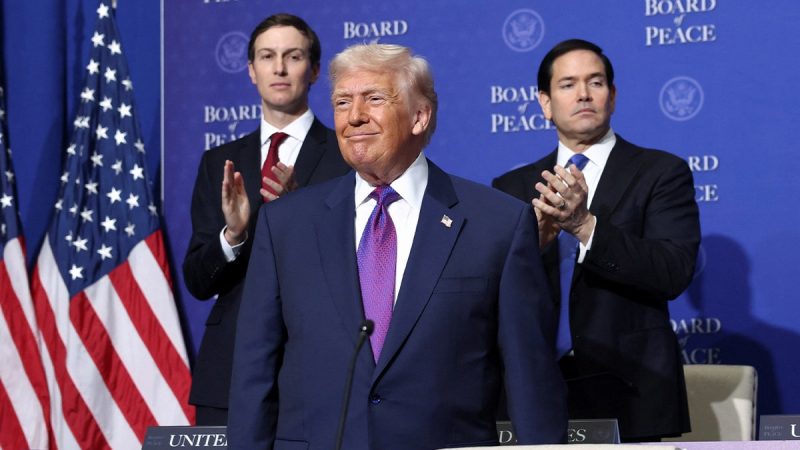
President Donald Trump welcomed leaders from around the world on Thursday as he hosted the inaugural meeting of the Board of Peace in Washington, D.C. 

One country that would not be joining the board, but will be hosting a related event is Norway.

The U.S. president announced the plan for Norway to host a meeting on Palestinian aid during the inaugural meeting of the board on Thursday. However, as he announced Norway’s plans, he joked about getting the Nobel Peace Prize.

‘I’m excited to announce that Norway has agreed to host an event bringing together the Board of Peace — Oh, I thought when I saw this note, ‘I’m excited to announce that Norway,’ I thought they were going to say that they’re giving me the Nobel Prize. Oh, this is less exciting,’ Trump quipped. ‘Oh, it says, ‘I’m excited to announce that Norway,’ and I’m saying, ‘Oh, great, I’m getting the Nobel Prize. Finally, finally, they got it right.’ But I don’t care, I don’t care about the Nobel Prize. I care about saving lives.’

Trump received several nominations for the prize. However, they were declared past the Nobel Committee’s nomination deadline. In the end, the award was given to then-exiled Venezuelan opposition leader María Corina Machado.

Following the capture of Venezuela’s dictatorial leader Nicolás Maduro, Machado came to the U.S., where she met with Trump and presented him with her Nobel Peace Prize.

‘I presented the President of the United States the medal… the Nobel Peace Prize, and I told him, ‘Listen to this, 200 years ago, General Lafayette gave Simón Bolívar a medal with George Washington’s face on it,’ Machado said while speaking at the U.S. Capitol in January. ‘He kept that medal for the rest of his life. Actually, when you see his portraits, you can see the medal.’

She said Lafayette gave the medal to Bolívar as a symbol of the partnership between the people of the U.S. and the people of Venezuela and their shared fight for freedom against tyranny.

Trump thanked Machado for the medal in a post on Truth Social on Thursday evening.

‘It was my Great Honor to meet María Corina Machado, of Venezuela, today,’ Trump wrote. ‘She is a wonderful woman who has been through so much. María presented me with her Nobel Peace Prize for the work I have done. Such a wonderful gesture of mutual respect. Thank you María!’

Norway has said that it would not join the Board of Peace. However, it is set to convene its Ad-Hoc Liaison Committee (AHCL) for Palestinian aid, according to The Times of Israel. The outlet noted that Norway has led the AHCL for decades, as it was established in the wake of the Oslo Accords, which were also aimed at ending the Israel-Hamas conflict.

A spokesperson for the Norwegian Foreign Ministry told The Times of Israel that Norway ‘remains firm’ in its position against joining the Board of Peace.

This post appeared first on FOX NEWS

The U.S. is putting its money where its mouth is when it comes to the Board of Peace. President Donald Trump announced during the inaugural meeting of the board that the U.S. was committing to contribute $10 billion to the board.

‘The Board of Peace is showing how a better future can be built, starting right here in this room,’ Trump said on Thursday. ‘I want to let you know that the United States is going to make a contribution of $10 billion to the Board of Peace… and we’ve had great support for that number.’

The president said the contribution ‘sounds like a lot, but it’s a very small number’ when compared to the cost of war. Trump estimated that the $10 billion commitment was equivalent to the cost of two weeks of fighting.

‘Together, we can achieve the dream of bringing lasting harmony to a region tortured by centuries of war, suffering and carnage,’ Trump added, saying that he hoped it could serve as inspiration for other nations entangled in conflicts that seem unending.

The Board of Peace was set up as part of the Trump administration’s plans to end the Israel-Hamas war and to rebuild Gaza. Several countries have committed to joining the board, including Argentina, Albania, Armenia, Azerbaijan, Bahrain, Belarus, Bulgaria, Cambodia, Egypt, El Salvador, Hungary, Indonesia, Jordan, Kazakhstan, Kosovo, Kuwait, Morocco, Mongolia, Pakistan, Paraguay, Qatar, Saudi Arabia, Turkey, the United Arab Emirates, Uzbekistan and Vietnam.

While touting the significance of the board, Trump also encouraged more nations to join not just the initiative, but in a greater effort toward peace, singling out Iran in particular.

‘And now is the time for Iran to join us on a path that will complete what we’re doing. And if they join us, that’ll be great. If they don’t join us, that’ll be great too, but it will be a very different path,’ Trump said. ‘They cannot continue to threaten the stability of the entire region, and they must make a deal.’

The president warned that ‘bad things’ would happen if Iran did not make a deal.

‘Iran is a hot spot right now. And they’re meeting, and they have a good relationship with the representatives of Iran,’ Trump said. ‘And, you know, good talks are being had. It’s proven to be over the years, not easy to make a meaningful deal with them. And we have to make a meaningful deal. Otherwise, bad things happen. But we have to make a meaningful deal.’

Representatives of the U.S. and Iran recently participated in indirect nuclear talks in Oman, with both sides meeting with Omani foreign minister Badr al-Busaidi. Following the indirect talks, which he said were ‘very good,’ Trump told reporters aboard Air Force One that Iran wanted to make ‘a deal very badly.’

‘They know the consequences if they don’t make a deal. The consequences are very steep,’ Trump told reporters earlier this month.

Iranian foreign minister Abbas Araghchi also expressed optimism after the indirect talks, which he said were ‘a good start.’

‘After a long period without dialogue, our viewpoints were conveyed, and our concerns were expressed. Our interests, the rights of the Iranian people, and all matters that needed to be stated were presented in a very positive atmosphere, and the other side’s views were also heard,’ Araghchi said at the time.

‘It was a good start, but its continuation depends on consultations in our respective capitals and deciding on how to proceed,’ he added.

A top Iranian official was spotted in Oman just days after the indirect talks, though it was not immediately clear if he was there to discuss next steps in the negotiations.

The Associated Press contributed to this report.

This post appeared first on FOX NEWS

The U.S. Commission of Fine Arts has officially fast-tracked the estimated $400 million proposal to build President Donald Trump’s new White House East Wing ballroom Thursday.

While Thursday’s session was originally intended only for design discussion, Chairman Rodney Mims Cook Jr. moved for an immediate final approval.

‘Our sitting president has actually designed a very beautiful structure,’ Cook said before the vote. ‘The United States just should not be entertaining the world in tents.’

The project involves building the ballroom on the site where the East Wing once stood, following its October demolition.

Six of the seven commissioners voted in favor. Commissioner James McCrery abstained, having served as the project’s architect.

‘This is an important thing to the president. It’s an important thing to the nation,’ Fine Arts chairman Rodney Mims Cook Jr. said in the panel’s first public hearing on Trump’s proposal earlier this month.

Administrations long before Trump’s complained about having to host State Dinners and major events in temporary structures. The old East Wing dining room had just a 200-seat capacity, according to the White House, making this expansion more than triple the seats and nearly double the square footage of the main White House structure.

The estimated $400 million project has faced criticism from Democrats, but Trump has vowed the funding to be private and the benefits to be immense.

The National Trust for Historic Preservation had filed a federal lawsuit to halt construction.

‘We’re donating a $400 million ballroom, and we got sued not to build it – for 150 years they’ve wanted a ballroom,’ Trump said in December. ‘And we’re giving them, myself and donors are giving them free of charge for nothing. We’re donating a building that’s approximately $400 million.

‘I think I’ll do it for less, but it’s 400. I should do it for less. I will do it for less, but just in case they say 400; otherwise, if I go $3 over, the press will say it costs more.’

Despite Thursday’s approval, the project faces further review March 5 by the National Capital Planning Commission, led by a top White House aide.

The Associated Press contributed to this report.

This post appeared first on FOX NEWS

Investor Insight

Steadright Critical Minerals is advancing a portfolio of high-grade, historically proven critical mineral assets in Morocco, combining near-term cash flow potential with exploration upside.

Overview

Steadright Critical Minerals (CSE:SCM) is a Canadian-listed mineral exploration and development company focused on unlocking value from Morocco’s rich mineral endowment. The company targets projects with established production histories, existing geological data, and clear development pathways to accelerate timelines and reduce risk, combining near-term cash flow with long-term exploration potential.

Its core assets include the fully permitted historic Goundafa polymetallic mine, the Copper Valley copper-lead-silver project located in a proven mining district, and the TitanBeach heavy mineral sands project along Morocco’s Atlantic coast. Steadright’s recent letter of intent with SilverLine Mining SARL could further enhance its portfolio with a licensed, silver-focused asset, underscoring its strategy of acquiring high-quality, permitted projects.

Operating in Morocco—a jurisdiction recognized for modern mining legislation, robust infrastructure, and attractive fiscal incentives—Steadright benefits from a mining-friendly environment. The company is led by an experienced management team with decades of expertise in international mining, exploration, and capital markets, well-positioned to advance its projects efficiently.

Company Highlights

  • Near-Term Production: The historic Goundafa Polymetallic mine is fully permitted with a legacy of high-grade zinc, lead, copper, silver, and gold production, Goundafa offers near-term, non-dilutive cash flow from historic stockpile sales under a binding processing agreement.
  • Diversified Portfolio: Fully permitted Goundafa Polymetallic mine (PbZn-Cu-Ag-Au), the Copper Valley CopperLead-Silver Project, SilverLine Mining Sarl (LOI) and the TitanBeach Heavy Mineral Sands
  • Strategic Moroccan Operations: Operating in a mining-friendly jurisdiction with modern legislation, strong infrastructure, and significant fiscal incentives including corporate tax exemptions.
  • Experienced Leadership: Management and technical teams bring decades of international mining, exploration, and capital markets experience.

Key Projects

Goundafa Polymetallic Mine

The Goundafa mine is a historic operation with production from 1929 to 1956, yielding approximately 320,000 tonnes at combined grades exceeding 10 percent metals. Historical data indicate a conceptual mineral inventory of about 6.62 million tonnes, with zinc, lead, copper, silver, and gold mineralization defined to depths of 300 metres and potentially deeper.

Approximately 1.7 million tonnes are accessible through existing underground workings.

Steadright has entered a binding agreement with MoResCo Sarl to process and sell historic mineralized stockpiles, starting with 14,400 tonnes, expected to generate near-term, non-dilutive cash flow to support ongoing exploration and development.

Copper Valley Copper-Lead-Silver Project

Located within a carbonate-hosted polymetallic system, Copper Valley benefits from historic workings, existing access, and proximity to infrastructure. The project targets copper, lead, and silver mineralization in a proven mining district. In January 2026, Steadright submitted mining license and environmental permit applications, marking a key milestone toward advancing the project. Continued technical evaluation and exploration are underway to assess its full mineral potential.

TitanBeach Heavy Mineral Sands Project

TitanBeach targets heavy mineral sands along Morocco’s Atlantic coast, known for iron-titanium mineralization. Steadright holds a 75 percent interest in NSM Sarl, which controls 12 exploration licenses covering approximately 192 square kilometres of prospective ground. Sampling has returned titanium dioxide grades up to 14.94 percent, highlighting the project’s scale and grade potential.

Titanium’s critical importance spans aerospace, defense, medical, and industrial sectors. An NI 43-101 technical report is expected in early 2026, with interest from international groups for potential offtake and strategic partnerships.

SilverLine Polymetallic Project

Steadright has signed a non-binding letter of intent to acquire up to 60 percent of SilverLine Mining SARL, which holds a licensed mineral claim in the Eastern High Atlas Mountains, a polymetallic district known for silver and lead-zinc mineralization. This licensed mineral claim property holds an existing mining license.

This acquisition would add a licensed, silver-focused asset to Steadright’s Moroccan portfolio within a proven mining jurisdiction.

Management Team

Matt Lewis – Chief Executive Officer

Matt Lewis has a background in political science and capital markets, with experience as a licensed investment advisor and roles at several Canadian financial institutions. He brings expertise in business structuring, financing design, and capital raising, with a strong focus on the junior mining sector.

John Theobald – Chairman of the Board

John Theobald has more than 40 years of international mining experience across exploration, operations and capital markets. He has held senior executive and board roles at several mining and royalty companies and has led successful transactions, including the sale of First Coal Corporation to Xstrata.

Alan King – Technical Advisor

Alan King is an exploration industry veteran with decades of experience as a geophysicist. Formerly chief geophysicist for Inco and Vale Global Exploration, he has worked across a wide range of commodities and now operates as an independent consultant.

This post appeared first on investingnews.com

Mercado Minerals Ltd. (CSE: MERC) (‘Mercado‘ or the ‘Company‘) is pleased to report continued progress from ongoing exploration activities at its flagship Copalito Project (‘Copalito‘ or the ‘Project‘). The Company’s technical team in Mexico has been actively mapping, sampling, and advancing preparations for Mercado’s inaugural 3,000-metre diamond drill program.

Exploration Highlights

  • Newly discovered veins in outcrop have been identified in three previously unexplored areas, with significant ground still to be evaluated.
  • Mapping and prospecting are now 40% complete, which is designed to comprehensively cover all areas of the Copalito Project yet to be mapped and explored.
  • Drone-based airborne magnetic surveying is now completed. Preliminary data reveals potential vein extensions and will provide valuable structural insights when combined with mapping and geochemical data.
  • Drone LiDAR surveying has been completed. Following receipt of the survey data, analysis of the data will commence to investigate for features that may potentially be associated with vein mineralization outside of the known veins on the property.
  • Soil sampling on the property is now 25% complete, which is covering the potential northwest extension of the vein system at Copalito.

Discovery of New Veins and Outcrops

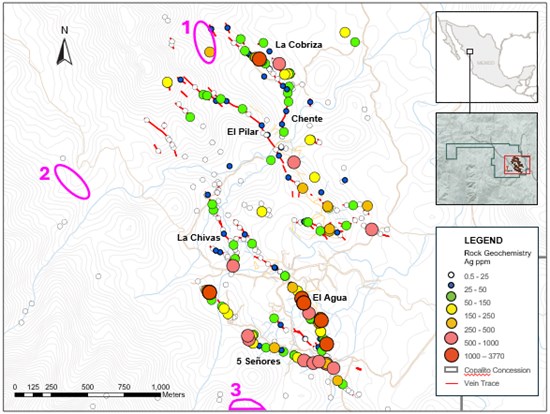
Prospecting across underexplored areas of Copalito has led to the discovery of multiple new vein occurrences in outcrop. Three newly identified areas of vein mineralization, which occur as quartz to quartz-carbonate veins, vein breccias and stockworks that range in width from 0.5 metres to 1.5 metres. Individual vein outcrops have been traced over a strike length of 1 metre to 10 metres, with two of the three new areas having veins exposed intermittently over a strike length of approximately 100 metres and 200 metres, respectively (Figure 1).

One of the new vein discoveries, currently interpreted to be the extension of the 5 Señores vein, occurs approximately 1 kilometre to the northwest of the last known location of the vein. This vein segment can be traced intermittently in two large outcrops over approximately 100 metres of strike length.

The second vein discovery, located near a historical surface float sample that returned 460 g/t silver, 0.31 g/t gold, 0.17% lead and 0.16% zinc, appears to be an extension of either the Cobriza or El Pilar veins. This new vein can be traced intermittently in four outcrops over 200 metres of strike length. The reader is cautioned that the above assay result is of a historic nature and that grab and float samples are not reliably indicative of the nature of the vein mineralization.

The third discovery is located approximately 500 m southwest of the 5 Señores vein, in an area with no previously documented mineralization. The discovery outcrop occurs as silicification and quartz stockwork found in andesite, which hosts galena sulphides and potentially silver-bearing sulphosalts. This area is intriguing as it is potentially located outside of the Copalito Graben, within which all previous known mineralization has been discovered.

All newly identified veins and mineralization have been sampled and are ready for shipment and analysis. Results from these samples will be released to the market once received. The full significance of the newly identified veins and mineralization is unknown pending further investigation and assay results.
Cannot view this image? Visit: https://images.newsfilecorp.com/files/12124/284460_fb544d67545cbb8f_001.jpg

Figure 1: Plan map of Copalito vein array with 3 areas of new mineralization occurrences outlined.

To view an enhanced version of this graphic, please visit:
https://images.newsfilecorp.com/files/12124/284460_fb544d67545cbb8f_001full.jpg

Drone Airborne Magnetic Survey

The high-resolution drone based magnetic survey has been completed, with data now being compiled for detailed interpretation. Early integration of magnetic results with existing geological and geochemical datasets is yielding encouraging correlations. Preliminary imagery highlights magnetic lineaments that correlate with known structures that host veins and mineralization, as well as new magnetic signatures away from known veins that have the potential to reveal new structures, potential veins and extensions to known veins. Current mapping and prospecting efforts in the areas of these new magnetic signatures have encountered new structures and vein mineralization discoveries that support this correlation.

Drone LiDAR Survey

Processing of the completed drone LiDAR survey is underway. Initial interpretation is expected to enhance understanding of surface expressions, identify subtle topographic features associated with veining, reveal areas with historic mine workings and highlight new areas of interest for sampling and mapping.

Soil Sampling

A systematic soil grid covering the know vein system and un-explored portions of Copalito is now 25% complete. The program is designed to fingerprint the soil geochemical signature over the known veins and expand the grid towards the northwest to help further define the extension of existing veins, or identify new target areas. This may reveal signatures that can aid in identifying new veins and vein systems in underexplored areas as well as providing insight into where vertically in the mineralizing system the outcropping veins at Copalito are located.

CEO Comments

Daniel Rodriguez, CEO & Director, comments ‘Our team is firing on all cylinders as we advance Copalito toward our first drill program. Prospecting in underexplored areas is already proving highly rewarding, and I’m eager to see the assay results from the newly discovered veins. Our technical team in Mexico continues to demonstrate exceptional expertise in the Sierra Madre, and with drilling on the horizon, I look forward to being on the ground with them as we take this next major step.’

Qualified Person

The technical information in this news release has been prepared in accordance with the Canadian regulatory requirements set out in National Instrument 43-101 (Standards of Disclosure for Mineral Projects) and was reviewed and approved by Kelson Willms, P.Geo., of Archer, Cathro & Associates (1981) Limited. Mr. Willms is a Qualified Person for the purposes of National Instrument 43-101

About Mercado Minerals Ltd.

Mercado Minerals Ltd. (CSE: MERC) is a silver-focused exploration company targeting the next world-class discovery in Mexico’s emerging Western Silver Belt, part of the prolific Sierra Madre Occidental mining district. With a proven team boasting extensive experience in Mexican exploration, Mercado is actively advancing multiple projects across more than 3,000 hectares. The Company is committed to creating shareholder value through disciplined exploration, strategic growth, and discovery-driven results.

For further information, contact:
Daniel Rodriguez
CEO & Director
Phone: (604) 353-4080
Email: drodriguez@mercadominerals.com

John Fraser
VP Business Development & Director
Phone: (604) 838-7677
Email: jfraser@mercadominerals.com

Forward-Looking Statement (Safe Harbor Statement):

This press release contains forward-looking statements within the meaning of applicable securities laws. The use of any of the words ‘anticipate,’ ‘plan,’ ‘continue,’ ‘expect,’ ‘estimate,’ ‘objective,’ ‘may,’ ‘will,’ ‘project,’ ‘should,’ ‘predict,’ ‘potential’ and similar expressions are intended to identify forward-looking statements. In particular, this press release contains forward-looking statements concerning the Company’s exploration plans and the intended use of proceeds from the Offering. Although the Company believes that the expectations and assumptions on which the forward-looking statements are based are reasonable, undue reliance should not be placed on these statements because the Company cannot provide assurance that they will prove correct. Forward-looking statements involve inherent risks and uncertainties, and actual results may differ materially from those anticipated. These forward-looking statements are made as of the date of this press release, and, except as required by law, the Company disclaims any intent or obligation to update publicly any forward-looking statements.

Neither the Canadian Securities Exchange nor its Regulation Services Provider (as defined in the policies of the Canadian Securities Exchange) accepts responsibility for the adequacy or accuracy of this release.

Source

This post appeared first on investingnews.com

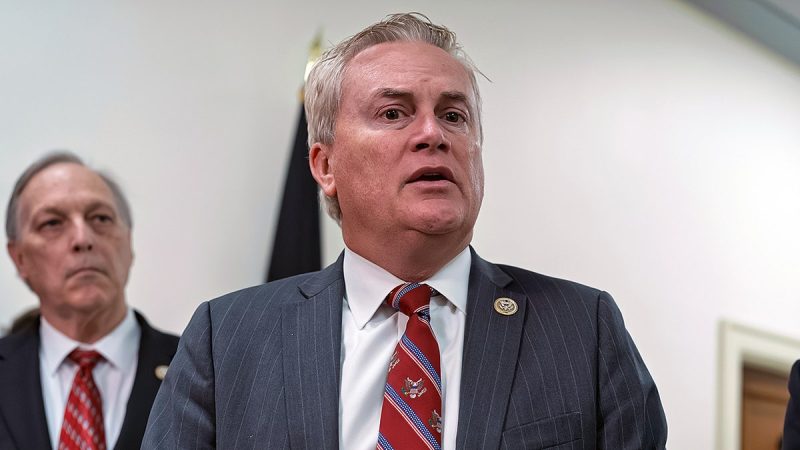
The senior lawmaker leading the U.S. House of Representatives investigation of Jeffrey Epstein is the latest high-profile official to sound off on the arrest of former British royal Andrew Mountbatten-Windsor.

House Oversight Committee Chairman James Comer, R-Ky., reiterated the need for accountability and lauded the Trump administration’s commitment to releasing its own information on Epstein.

‘There must be accountability for anyone who was involved in Jeffrey Epstein’s horrific crimes,’ Comer told Fox News Digital. ‘The Justice Department’s transparency is ensuring that no one is above the law — even British royalty.’

News first broke of the former Prince Andrew’s arrest on suspicion of misconduct in public office in the early hours of Thursday morning on the U.S. East Coast.

It comes after a British police department said it was looking into a complaint that Andrew shared confidential information with Epstein, according to the BBC.

While he has denied any wrongdoing in relation to Epstein, Andrew was one of the late pedophile’s most well-known associates through the years.

Virginia Giuffre, one of Epstein’s earliest and most vocal accusers, alleged in a memoir that Andrew had sex with her when she was a minor.

Giuffre died of suicide in April of last year. Epstein died of suicide in a Manhattan jail while awaiting trial in 2019.

Rep. Nancy Mace, R-S.C., one of the earliest U.S. lawmakers to call for Andrew’s arrest in October 2025, told Fox News Digital, ‘If you’re watching a former prince get arrested today, remember: four Republicans refused to flinch, refused to fold, and forced the Epstein files into the light.’

‘Courage has consequences. So does corruption,’ said Mace, also a House Oversight Committee member.

She was one of four House Republicans who voted with Democrats to force a vote on mandating that the Department of Justice (DOJ) release all of its files related to Epstein’s case. The subsequent House vote was nearly unanimous, with just one GOP lawmaker voting against it.

Meanwhile, Democrats on the House Oversight Committee sounded off with renewed calls for accountability for other alleged Epstein associates.

Rep. Suhas Subramanyam, D-Va., said Andrew ‘appears repeatedly in the documents we have uncovered as having knowledge of Jeffrey Epstein’s crimes and is specifically named by victims as someone who engaged in wrongdoing.’

‘We hope today’s arrest will lead to answers and show that there will be accountability even if you hide, regardless of how rich and powerful you are,’ he said in a statement.

Rep. Pramila Jayapal, D-Wash., wrote on X, ‘This is exactly the kind of accountability we need from the Department of Justice. It’s time to bring the perpetrators to justice.’

This post appeared first on FOX NEWS

Texas Democratic Senate candidate James Talarico’s campaign is $2.5 million richer this week and a bit closer to victory after Stephen Colbert, host of ‘The Late Show’ on CBS, made up a ridiculous lie about being censored by President Trump.

It took a few days for the dust to settle, but now that we have a clear picture of what happened, it is about as bad as it can be. In fact, it would likely be a fireable offense if the ratings challenged Colbert was not already slated to get the ax in May.

According to Colbert’s version of events, which is falling apart faster than a house of cards in a wind tunnel, he was told by CBS lawyers on Monday, just minutes before he was set to interview Talarico, that he could not air the conversation. Why? Because of the Trump administration Federal Communication Commission’s new rules on equal time.

A petulant Colbert went on to tell his audience that he wasn’t even supposed to mention being censored to them, but, putting on his free speech super hero cape, he would do the interview anyway, defying his bosses and release it on YouTube.

The only problem with all of this is that, according to both CBS and the FCC, nobody told Colbert the interview could not air. He just made it up. All that happened was that CBS lawyers told him if he had Talarico on, he might also have to give equal time to his Demcorat primary opponent, Rep. Jasmine Crockett, D-Texas.

It is not clear why Colbert would have any issue with having Crockett on, unless perhaps he and his friends in high places think the preppy White Bible school boy is more electable than the sassy Black finger-snapping lady.

Talarico was fundraising off of Colbert’s lie within minutes and raked in $2.5 million. Oh, and did I mention that early voting in Texas started on Tuesday, the day after this duplicitous debacle?

It truly was remarkable to watch. Even by Wednesday, when they knew quite well Colbert had not been censored, CNN had an entire panel that argued the Trump administration’s pressure on CBS had backfired because of the fundraising and the 5 million YouTube views the video got.

But there was no pressure on Colbert from the Trump administration. As FCC Chairman Brendan Carr told Fox News Channel’s Laura Ingraham, ‘CBS was very clear that Colbert could run the interview that he wanted with that political candidate. They just said, you may have to comply with equal time… But instead of doing that, they claimed that they were victims.’

All that the FCC has said, without taking any action, is that it may enforce equal time rules for talk shows, something it has not done in the past, but given how skewed late night comedy and daytime talk have become, it is worth considering.

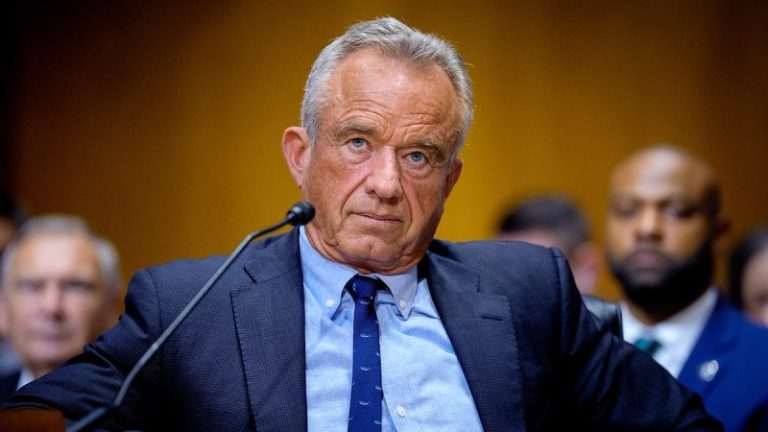
‘The View,’ ABC’s mid-morning girl gaggle, had 128 liberal guests in 2025 and only two conservatives, one of which was actress Cheryl Hines, who is actually not conservative, just married to Health and Human Services Secretary Robert F. Kennedy Jr. 

Put bluntly, the reason that the equal time rules have not been enforced on talk shows is that they never had to be, because Johnny Carson, Tom Snyder and Phil Donahue didn’t turn their shows into nonstop political ads. Obviously, that has changed.

Colbert has been very clear that he purposefully uses his ‘comedy show’ to push a political agenda, in this case, to the benefit of James Talarico and the detriment of Jasmine Crockett, who is now in the awkward position of defending the Trump administration.

However, wherever one comes down on the equal time rules, it is crystal clear that Colbert is just flat-out, stone-cold lying when he says they were used to ban his interview from the air. Sadly, it is a lie many Democratic voters may take to their deathbeds.

There were two big victims to Colbert’s perfidy, the first being Crockett, who may be discovering that she is a little too Brown and uppity for the rich White men who still control liberal media and politics.

The second victim was the average citizen, who was separated from their money based on Colbert’s lies to fill the coffers of Talarico.

Thankfully, we only have about two more months to deal with Colbert’s nonsense and lies, at least on CBS late night. After that he can go to YouTube and interview anyone he pleases, just as he could have on Monday night.

This post appeared first on FOX NEWS

The Administration for Children and Families (ACF), an agency within the Department of Health and Human Services (HHS) overseeing the well-being of children, eliminated thousands of pages of regulatory guidance that had been languishing on the books as far back as 1976, Fox News Digital learned. 

The Administration for Children and Families is a Health and Human Services agency charged with promoting the economic and social well-being of kids and their families via overseeing programs such as the Head Start school readiness program, child support enforcement, foster care and adoption services, and managing unaccompanied minors. 

The office rescinded 35,781 pages of guidance documents after an agencywide review found 74% of its ‘sub-regulatory footprint’ was obsolete. The documents included technical bulletins, program instructions, action transmittals and dear colleague letters — letters from federal agencies or members of Congress that typically inform colleagues on new guidance or legislation — that had accumulated across the past 50 years. 

The Administration for Children and Families emphasized that the rescinded documents were not erased, but instead archived online along with a detailed list of current guidance documented on the Department of Health and Human Services’ website. 

The Administration for Children and Families was officially established in 1991, but its origins and work stretch back decades, inheriting programs and guidance from earlier Health and Human Services offices — including major initiatives that date to the mid-1970s. 

‘President Trump’s regulatory reform agenda is unparalleled in U.S. history,’ the Administration for Children and Families Assistant Secretary Alex J. Adams said in a statement to Fox News Digital. 

‘ACF is proud to do our part to advance the President’s agenda by taking the first of many planned actions, namely removing 36,000 pages of obsolete sub-regulatory guidance that had quietly accumulated over decades and shining a brighter spotlight on what remains,’ he added. ‘In essence, ACF has brought our regulatory dark matter to light.’ 

The rescinded guidance included program-specific documents such as a memo on filing the June 1999 Child and Family Services Plan and Final Report, 2005 avian flu guidance and a 2010 staffing-change notice for the now-defunct Division of Energy Assistance.

The Administration for Children and Families directed its Office of Legislation and Budget to compile a comprehensive list of guidance documents considered active — a process that took three weeks just to catalog the files, the agency said. The inventory produced more than 4,000 documents totaling about 55,776 pages, dating back to 1976. 

Each program office was required to justify whether the individual documents were still needed, and ordered to provide written rationale if guidance was deemed obsolete or necessary. Obsolete documents were considered ones that related to old funding cycles, guidance superseded by newer rules, duplicate statutes or documents related to programs that no longer list, Fox News Digital learned. 

The Administration for Children and Families said the goal of cleaning up the office with outdated guidance is to reduce confusion and allow grant recipients to focus resources on ‘delivering outcomes for American children and families,’ rather than navigating tens of thousands of pages of outdated documentation.

The move aligns with the Trump administration’s broader push to pare back regulations and cut what it calls bureaucratic red tape.

The Federal Communications Commission, for example, took a hatchet to outdated policies in a sweeping deregulation effort in 2025, including doing away with outdated guidance on the use of telegraphs, rabbit-ear TV receivers and phone booth rules in July 2025. 

This post appeared first on FOX NEWS